



U.S. grocery prices surge 33% in 7 years, marking largest increase in 50 years
Jul 27, 2026, 01:23 pm


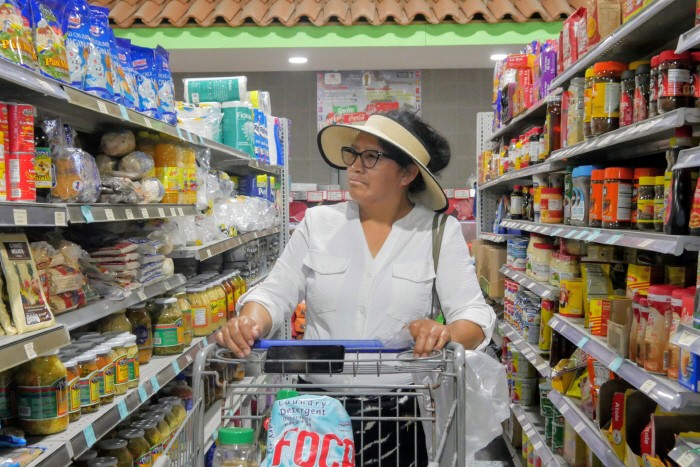 |
| On July 2 (local time), a woman shops in a grocery store aisle at a supermarket in Cleveland, Texas, U.S. / AP, Yonhap News |
Grocery prices in major U.S. cities have surged 33% this year compared to early 2019, marking the steepest increase in 50 years, the Associated Press reported on July 25 (local time), citing data from the Bureau of Labor Statistics under the U.S. Department of Labor.
The sharp rise in U.S. grocery prices stems from a complex mix of factors, including supply chain disruptions caused by COVID-19, climate disasters, international conflicts, and tariff hikes.
The pandemic disrupted supply chains, driving up transportation and labor costs, while consecutive climate and disease disasters such as droughts, hurricanes, and avian influenza significantly reduced the output of agricultural products, dairy, and livestock.
On top of this, the Trump administration imposed high tariffs on key imported goods, including coffee, tomatoes, and chocolate, between 2024 and 2025 under the pretext of protecting U.S. industries, causing prices of related products to skyrocket.
The war between Russia and Ukraine disrupted oil and fertilizer supplies, further driving up production costs. More recently, escalating conflict in the Middle East has triggered another surge in oil prices, pushing logistics costs higher and accelerating food inflation.
Amid these soaring prices, American consumers are adjusting their daily lives with survival strategies of their own. The AP noted that a growing number of people are actively using discount apps and coupons to compare prices, opting for cheaper alternatives over brand-name products.
Many households are reducing meat consumption and shifting their diets to chicken or processed meats. Some increasingly rely on food banks—nonprofit organizations providing free food—and the Supplemental Nutrition Assistance Program (SNAP) for low-income households, often struggling to secure even one decent meal a day.
A resident in Texas said that beef prices have risen so much that they now survive on chicken and processed meats. A citizen in Massachusetts expressed frustration, saying they plan their meals around discounted items.
In San Francisco, appeals have continued from residents saying life would be unsustainable without SNAP and food banks. In Hawaii, where local produce prices have surged, more people are turning to imported goods at wholesale clubs like Costco.
Soaring grocery prices have forced low-income households to spend a third of their income on food, placing a significantly heavier burden on them than on middle- or high-income groups, the AP added.
Sally Lyons Wyatt, executive vice president at market research firm Circana Global, pointed out that consumers are crafting personal household strategies under financial pressure. She noted that they are not merely cutting costs, but strategically altering their overall lifestyles through focused purchases of discounted goods, brand switching, and diet adjustments.
Matt Hamory, global head of the grocery practice at consulting firm AlixPartners, explained that consumers set a psychologically acceptable weekly limit for food expenses. He added that if prices feel reasonable, they may shop at pricier stores or buy snacks, but when prices rise excessively, they ultimately shift to cheaper stores or cut back on spending.
Park Jin-sook
Most Read
-
1
Celltrion’s Omlyclo gains ground in major European..

-
2
Trump demands rates fall below 1% as Fed hikes for..

-
3
Trump makes $1 trillion bet ahead of midterm elect..

-
4
Iran resumes ballistic missile production, assembl..

-
5
Samsung Electronics, Mistral AI to jointly develop..

-
6
Trump warns countries not helping U.S. must pay re..

-
7
Apple launches first foldable, 1 million won prici..

PEOPLE






HEADLINE NEWS
- Trump to roll out ‘unprecedented welcome’ for Xi with B-2 bombers, F-22 fighters
- S. Korea, U.S., and Japan form united front on Taiwan and economic coercion..
- Trump administration moves to impose sweeping sanctions on International Cr..
- Xi to make state visit to U.S. Sept. 23-25, dispelling rumors over his heal..

-
Address : In-Young Bldg., 34, Uisadang-daero 1-gil, Yeongdeungpo-gu, Seoul
Copyright by ASIATODAY CO., LTD. All rights resereved