



U.S. and Saudi Arabia sign 123 Agreement
Jul 23, 2026, 04:05 pm


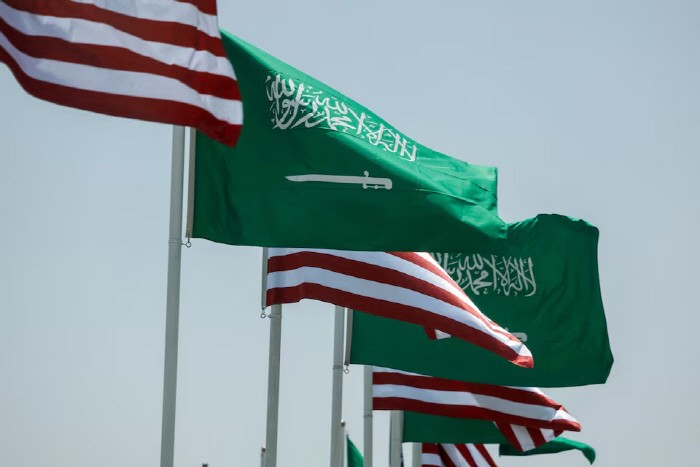 |
| Flags of the United States and Saudi Arabia flutter along a highway in Riyadh on May 12, 2025 (local time), ahead of US President Donald Trump's visit to Riyadh, Saudi Arabia. / Photo courtesy of Reuters, Yonhap News Agency |
Major news outlets, including The Washington Post (WP) and The New York Times (NYT), reported on July 22 (local time) that the United States and Saudi Arabia have signed a civil nuclear cooperation agreement, known as the "123 Agreement," which includes the potential for nuclear power plant construction and uranium enrichment within Saudi Arabia.
Under the 123 Agreement, based on Section 123 of the U.S. Atomic Energy Act of 1954, the two nations will conduct a joint two-year feasibility study on uranium enrichment within Saudi territory. Should enrichment proceed, U.S. companies will control and operate the relevant facilities under the condition that the underlying technology is not disclosed to Saudi Arabia.
Unlike nuclear agreements with traditional allies, this deal includes custom safeguards and related deferral provisions under which a dedicated U.S. team will directly conduct verifications instead of standard inspections by the UN's International Atomic Energy Agency (IAEA), WP reported.
Differing evaluations and outlooks have emerged from inside and outside the agreement.
The U.S. administration and the nuclear power industry argue that by exporting U.S.-led technology and supply chains to meet growing global demand for nuclear power, the uranium enrichment network can be kept within a controllable scope. They also highlight as major achievements the economic benefits for U.S. nuclear companies expected to participate in the project—such as Westinghouse—as well as maintaining regional influence.
The U.S. Department of Energy explained that the agreement was designed to strengthen commercial and security cooperation between the two countries while adhering to the highest standards of nuclear safety and nonproliferation.
Conversely, nonproliferation experts and some U.S. congressional officials pointed out that recognizing Saudi Arabia's right to enrich uranium while bypassing IAEA-level international inspections could trigger a nuclear arms race in the Middle East.
Israeli political and security figures also expressed concern over changes to the regional security landscape, while doubts were raised within the U.S. regarding whether these safeguards could be sustained in the event of a regime change in Saudi Arabia.
Dina Esfandiary, an Iran expert at Bloomberg Economics, evaluated the agreement by stating, "It's a carrot given to Saudi Arabia at a time when they are frustrated with President Trump," adding, "The U.S. has made a concession."
The U.S. has historically maintained a strict stance on nuclear nonproliferation, allowing uranium enrichment only in exceptional cases contingent upon rigorous IAEA inspections.
Even the 2009 nuclear agreement signed with the United Arab Emirates (UAE) included commitments to accept strict IAEA nuclear inspections and renounce rights to domestic nuclear fuel production. However, it was reported that this agreement with Saudi Arabia omitted this "Gold Standard," granting an unprecedented approval.
NYT analyzed that this agreement represents an attempt to keep Saudi Arabia anchored within the U.S.-led order amid escalating war in the Middle East. Since constructing nuclear reactors takes more than a decade and leaves the country reliant on U.S. technology thereafter, security and economic ties between the two nations are bound to deepen.
The 123 Agreement requires approval from the U.S. Congress to officially take effect, where the submitted proposal will undergo a 90-day review period.
Lee Jeong-eun
Most Read
-
1
Celltrion’s Omlyclo gains ground in major European..

-
2
Trump demands rates fall below 1% as Fed hikes for..

-
3
Trump makes $1 trillion bet ahead of midterm elect..

-
4
Iran resumes ballistic missile production, assembl..

-
5
Samsung Electronics, Mistral AI to jointly develop..

-
6
Trump warns countries not helping U.S. must pay re..

-
7
Apple launches first foldable, 1 million won prici..

PEOPLE






HEADLINE NEWS
- Trump to roll out ‘unprecedented welcome’ for Xi with B-2 bombers, F-22 fighters
- S. Korea, U.S., and Japan form united front on Taiwan and economic coercion..
- Trump administration moves to impose sweeping sanctions on International Cr..
- Xi to make state visit to U.S. Sept. 23-25, dispelling rumors over his heal..

-
Address : In-Young Bldg., 34, Uisadang-daero 1-gil, Yeongdeungpo-gu, Seoul
Copyright by ASIATODAY CO., LTD. All rights resereved