



U.S. AI industry sounds alarm over Chinese AI models
Jul 22, 2026, 02:21 pm


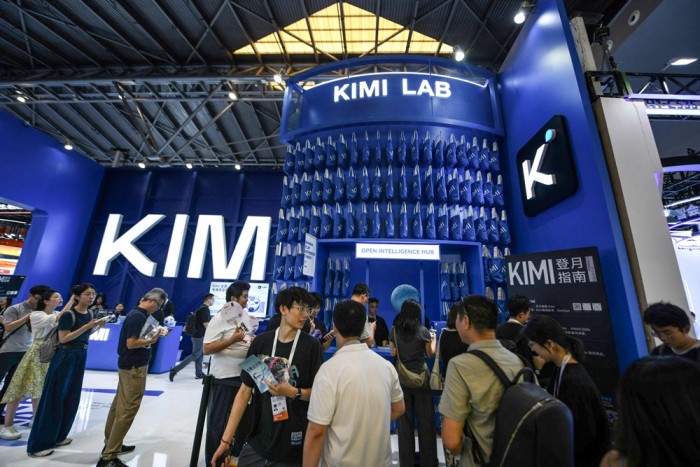 |
| Visitors look around the booth of Chinese startup Moonshot AI, displaying its AI model 'Kimi K3', at the World Artificial Intelligence Conference (WAIC) in Shanghai, China, on July 17 / Photo by AFP, Yonhap News Agency |
US artificial intelligence (AI) companies are raising a series of concerns over whether the unrestrained use of rapidly rising Chinese AI models should be allowed, the Wall Street Journal reported on July 20 (local time).
Executives from OpenAI and Anthropic are issuing successive warnings regarding the recent emergence of new, low-cost yet high-performing AI models developed in China.
They argued that if such models proliferate without regulation, a "dystopian future" could arrive, bringing unacceptable security risks.
Recently released high-performing open Chinese AI models, such as Moonshot AI's Kimi K3 and Alibaba's Qwen 3.8 Max, are drawing praise from investors and users alike, disrupting the market landscape long dominated by American companies.
These models have become a subject of debate because they utilize the "open-weight" approach. This allows users to download the AI models and modify the data directly to suit specific situations or purposes.
As a result, the US administration is deliberating whether to restrict the use of these programs within the country.
Dean Ball, lead for Strategic Futures at OpenAI, warned on social media on July 17 that "one plausible outcome of a world dominated by open-weight models is 'full AI communism,'" adding that "this aligns precisely with the vision proposed by China."
He further added that it turns AI into a public good provided by the state as part of digital public infrastructure, rather than a market product.
Dario Amodei, chief executive officer of Anthropic, has also been warning about the risks of open AI systems.
In a recent interview with Bloomberg, he expressed concern that allowing anyone to freely download AI models equipped with advanced cybersecurity capabilities could prove harmful.
Kim Hyun-min
Most Read
-
1
Celltrion’s Omlyclo gains ground in major European..

-
2
Trump demands rates fall below 1% as Fed hikes for..

-
3
Trump makes $1 trillion bet ahead of midterm elect..

-
4
Iran resumes ballistic missile production, assembl..

-
5
Samsung Electronics, Mistral AI to jointly develop..

-
6
Trump warns countries not helping U.S. must pay re..

-
7
Apple launches first foldable, 1 million won prici..

PEOPLE






HEADLINE NEWS
- Trump to roll out ‘unprecedented welcome’ for Xi with B-2 bombers, F-22 fighters
- S. Korea, U.S., and Japan form united front on Taiwan and economic coercion..
- Trump administration moves to impose sweeping sanctions on International Cr..
- Xi to make state visit to U.S. Sept. 23-25, dispelling rumors over his heal..

-
Address : In-Young Bldg., 34, Uisadang-daero 1-gil, Yeongdeungpo-gu, Seoul
Copyright by ASIATODAY CO., LTD. All rights resereved