



Trump says strikes on Iran's underground nuclear facility at Pickaxe Mountain coming soon
Jul 22, 2026, 10:24 am


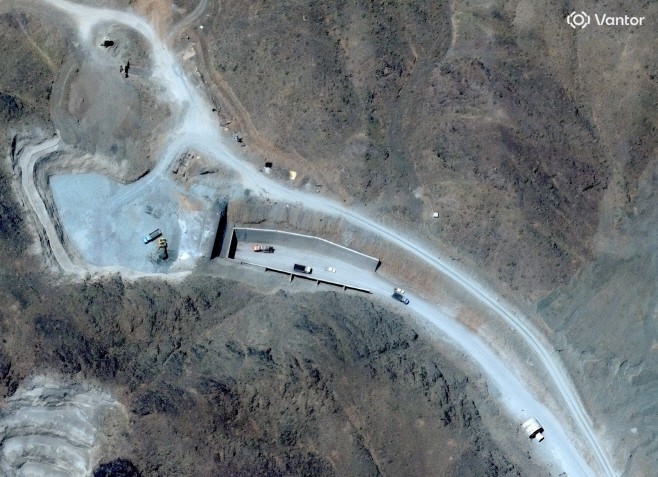 |
| A satellite image provided by satellite imaging company Vantor shows vehicles parked at the entrance to a tunnel in Pickaxe Mountain at the Natanz nuclear facility near Natanz, Iran, on June 21 / Photo by Reuters, Yonhap News Agency |
US President Donald Trump warned on July 21 (local time) that the United States would respond if Yemen's Houthi rebels execute a maritime blockade of Saudi Arabia. President Trump also signaled an imminent, powerful strike on "Pickaxe Mountain," where an underground Iranian nuclear facility is believed to be located.
Following the Houthis' warning, Saudi crude oil tankers began altering their routes, disrupting both the Strait of Hormuz and the Red Sea route—a key bypass for Hormuz—at the same time.
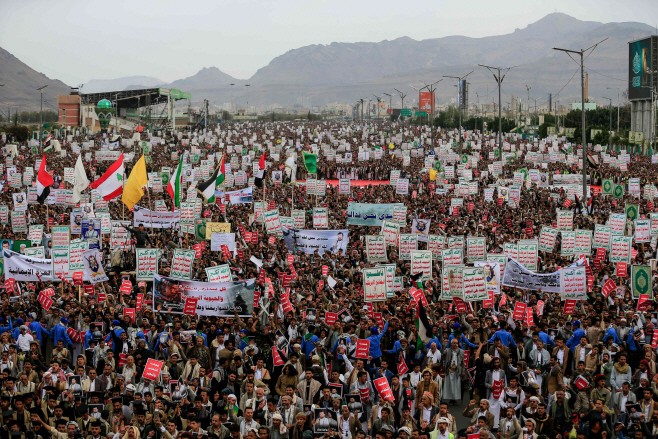 |
| Supporters of Iran-backed Houthis stage a rally in Sanaa, Yemen, on July 17 against what the group claims to be restrictions imposed by the Saudi-led coalition on Houthi-controlled areas. / Photo by AFP, Yonhap News Agency |
Trump warns of retaliation if Houthis attack vessels using Saudi ports
President Trump said during a meeting with Lebanese President Joseph Aoun at the White House that day, "It hasn't happened yet," adding, "If that happens, we will take care of it." Houthi rebels warned shipping companies that vessels loading or unloading cargo at Saudi ports could be targeted "anywhere within the operational reach of the Yemeni armed forces." The Houthis' Humanitarian Operations Coordination Center (HOCC) stated that the measure went into effect at 12:01 p.m. GMT on July 20 (9:01 p.m. KST on July 20).
According to the warning, the Houthis appear to be targeting ships utilizing Saudi ports rather than blocking all vessel transit through the Bab el-Mandeb Strait.
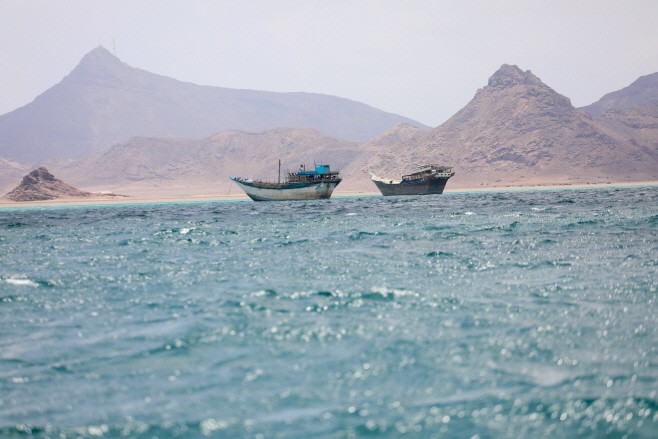 |
| Vessels float near the coast of the Bab el-Mandeb Strait in Yemen on April 2 / Photo by Reuters, Yonhap News Agency |
Houthi warnings force at least four Yanbu-bound tankers to reroute, disrupting Saudi bypass export route
At least four crude oil tankers altered their courses in the Red Sea following the Houthi warnings, the Financial Times reported. Three of these vessels had loaded crude oil at the port of Yanbu in western Saudi Arabia. Two of the tankers, which were bound for China and India, turned north toward the Suez Canal instead of heading south through the Bab el-Mandeb Strait, according to Reuters.
The Hong Kong-flagged New Prime was scheduled to load crude oil at Yanbu on July 26, but reportedly turned back before reaching the Bab el-Mandeb Strait. To bypass the Strait of Hormuz, Saudi Arabia has been transporting crude oil to Yanbu via its East-West Pipeline, exporting approximately 4.9 million barrels per day since April.
"The escalation of conflict around the Strait of Hormuz and regional energy infrastructure is raising supply security concerns and market uncertainty," Fatih Birol, Executive Director of the International Energy Agency (IEA), warned, according to Bloomberg. "Threats to the Bab el-Mandeb Strait, which has grown increasingly vital as a bypass for Hormuz, are further compounding these concerns." Brent crude surged past $91 a barrel on the news.
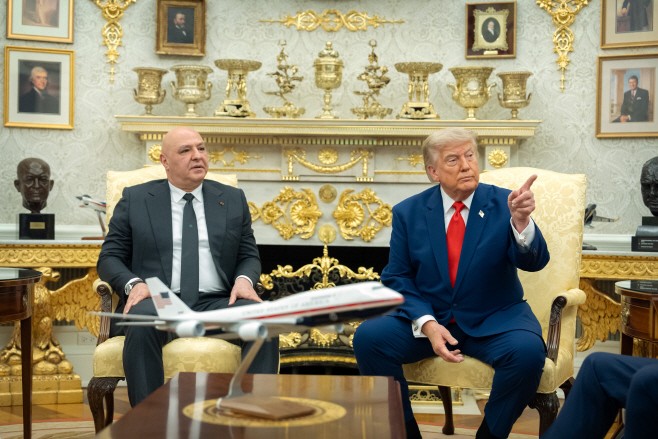 |
| US President Donald Trump (right) holds a meeting with Lebanese President Joseph Aoun in the Oval Office at the White House in Washington, D.C., on July 21 (local time) / Photo by AP, Yonhap News Agency |
Trump signals strikes on Pickaxe Mountain; WSJ reports Israel assesses thousands of centrifuges relocated
During his meeting with President Aoun, President Trump raised the possibility that Iran had moved key components required for nuclear weapons development to Pickaxe Mountain near Natanz. "We are going to hit that area very heavily, very soon," he said.
The Wall Street Journal reported that Israeli intelligence assessed Tehran moved thousands of centrifuges into the Pickaxe Mountain tunnels last autumn, sharing the intelligence with the United States. The underground complex being constructed beneath Pickaxe Mountain is estimated to sit roughly 91 to 137 meters deep under solid rock. Featuring at least four tunnel entrances—more than the two at the Fordow nuclear facility—its extreme depth and structure could make it difficult to neutralize even with the US military's 30,000-pound bunker buster bombs, according to the Financial Times.
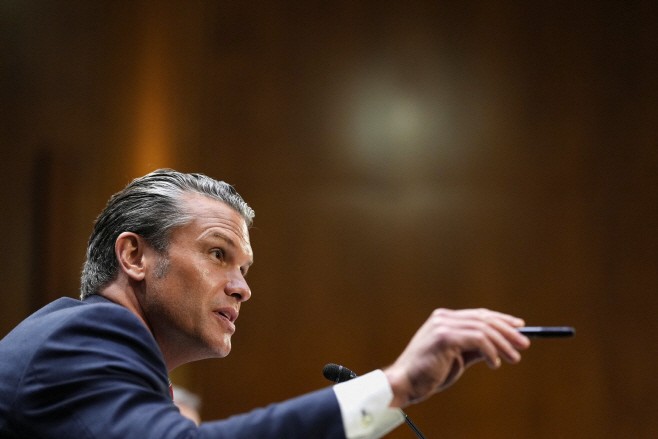 |
| US Secretary of War Pete Hegseth testifies during a Senate Appropriations Committee hearing on President Donald Trump's request for additional defense funding in Washington, D.C., on July 21 (local time). / Photo by Reuters via Yonhap News Agency |
Trump rules out immediate talks with Iran; Hegseth says "Preventing North Korea-style nuclear armament"
US Secretary of War Pete Hegseth said at the hearing that Iran had been building up its conventional military forces for 47 years like North Korea, adding, "We must remember that is precisely how North Korea developed its nuclear bomb."
President Trump said Iran "desperately wants" talks with the United States, but stated that he is "not interested until they are ready to meet in a meaningful way."
In an interview posted on his Telegram channel, Iranian Foreign Minister Abbas Araghchi stated that Iran will not abandon diplomacy, but will not be forced back into negotiations while under military attack. He claimed that Iran's actions in the Strait of Hormuz and the Persian Gulf have had global consequences, asserting that Iran has become a "global player."
Bloomberg analyzed that these remarks show Iran views its control over the Strait of Hormuz as leverage against the United States and a cornerstone of its national security.
Ha Man-joo
Most Read
-
1
Celltrion’s Omlyclo gains ground in major European..

-
2
Trump demands rates fall below 1% as Fed hikes for..

-
3
Trump makes $1 trillion bet ahead of midterm elect..

-
4
Iran resumes ballistic missile production, assembl..

-
5
Samsung Electronics, Mistral AI to jointly develop..

-
6
Trump warns countries not helping U.S. must pay re..

-
7
Apple launches first foldable, 1 million won prici..

PEOPLE






HEADLINE NEWS
- Trump to roll out ‘unprecedented welcome’ for Xi with B-2 bombers, F-22 fighters
- S. Korea, U.S., and Japan form united front on Taiwan and economic coercion..
- Trump administration moves to impose sweeping sanctions on International Cr..
- Xi to make state visit to U.S. Sept. 23-25, dispelling rumors over his heal..

-
Address : In-Young Bldg., 34, Uisadang-daero 1-gil, Yeongdeungpo-gu, Seoul
Copyright by ASIATODAY CO., LTD. All rights resereved