



Youth to bed, seniors to work: China's labor market faces severe strain
Jul 21, 2026, 11:17 am


In China, the labor market is reportedly facing severe strain, with young adults spending their days in bed due to a lack of job opportunities while many seniors diligently commute to an abundance of available work. If this issue is not resolved soon, China's economy—which aims to surpass the United States as the top global economic power around 2035—will almost certainly suffer a critical blow that will be exceptionally difficult to recover from.
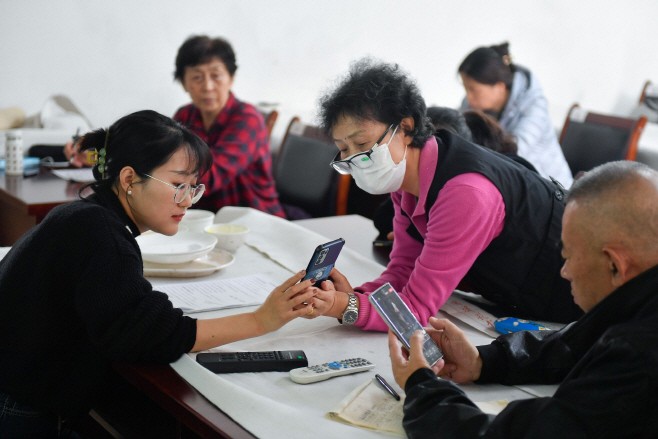 |
| A scene from a cottage industry workshop in Beijing. Young people are nowhere to be seen, while elderly workers fill the space. This seems to suggest that there are more jobs available for senior citizens than for the youth. / Courtesy of Economic Daily (Jingji Ribao) |
Judging from recent reports by media outlets such as the Economic Daily (Jingji Ribao), it is fair to say that China's youth unemployment crisis has reached a severe level. The official surveyed urban unemployment rate for youth aged 16 to 24 (excluding students) published by the National Bureau of Statistics stood at 15.6% as of May, making further explanation redundant. For young job seekers, the current labor market can be described as a complete nightmare.
However, conditions on the ground are reported to be far worse. According to Zhang Dandan, an economics professor at Peking University who has repeatedly raised the issue, the perceived unemployment rate in the field is nearly double the official figure. This places the actual rate well above 30%, a far cry from official announcements.
This sentiment is clearly reflected in recent buzzwords popular among Gen Z. Notable examples include "tangping" (lying flat)—staying in bed and doing nothing—and "quanzhi ernv" (full-time children), referring to adult children who rely on their parents for financial support. If young people who have given up on job hunting and abandoned any effort to find employment are included, it is reasonable to view the true unemployment rate as nearly double the official figure.
Numerous extreme cases illustrate this grim reality. The case of Mr. Ding, a young man profiled in foreign media as a "collector of prestigious degrees," stands out most prominently. A native of Fujian Province, he was a brilliant student who scored nearly 700 out of a maximum 750 points on the Gaokao, China's national college entrance examination. He naturally went on to graduate from Tsinghua University before earning a master's degree in energy engineering from another top institution, Peking University. He subsequently received a doctorate in biology from Nanyang Technological University, Singapore's premier university.
That was not all. He also earned a master's degree in biodiversity from Oxford University, the top institution in the UK. Completing his postdoctoral research at the National University of Singapore came as no surprise given his academic record. Yet, after entering the job market, he failed more than ten job applications. Today, he is reportedly working as a food delivery rider. This reality of youth unemployment defies description.
In stark contrast, job opportunities for senior citizens are said to be plentiful whenever they desire work. In particular, retired professionals from fields such as healthcare, law, journalism, academia, and government are actively recruited, with some organizations competing to hire them. Mr. Liu, a retired former diplomat in his mid-70s, voiced concern over this labor market polarization, noting, "Among the retired professionals I know, it is rare to find anyone idle without work. Even their spouses are earning more than enough pocket money through various small jobs."
The situation is similar for average seniors. As long as their physical health permits, there is an abundance of jobs such as security guards, caregivers, and nannies. Furthermore, seniors are actively taking up part-time gig work such as food delivery, competing directly with younger workers. If these conditions persist, China appears poised to lead the world in labor market polarization as well.
Hong Soon-do
Most Read
-
1
Celltrion’s Omlyclo gains ground in major European..

-
2
Trump demands rates fall below 1% as Fed hikes for..

-
3
Trump makes $1 trillion bet ahead of midterm elect..

-
4
Iran resumes ballistic missile production, assembl..

-
5
Samsung Electronics, Mistral AI to jointly develop..

-
6
Trump warns countries not helping U.S. must pay re..

-
7
Apple launches first foldable, 1 million won prici..

PEOPLE





HEADLINE NEWS
- Trump to roll out ‘unprecedented welcome’ for Xi with B-2 bombers, F-22 fighters
- S. Korea, U.S., and Japan form united front on Taiwan and economic coercion..
- Trump administration moves to impose sweeping sanctions on International Cr..
- Xi to make state visit to U.S. Sept. 23-25, dispelling rumors over his heal..

-
Address : In-Young Bldg., 34, Uisadang-daero 1-gil, Yeongdeungpo-gu, Seoul
Copyright by ASIATODAY CO., LTD. All rights resereved