



Rising memory costs push Apple and Google to hike prices with Galaxy Fold 8 to follow
Jul 13, 2026, 09:54 am


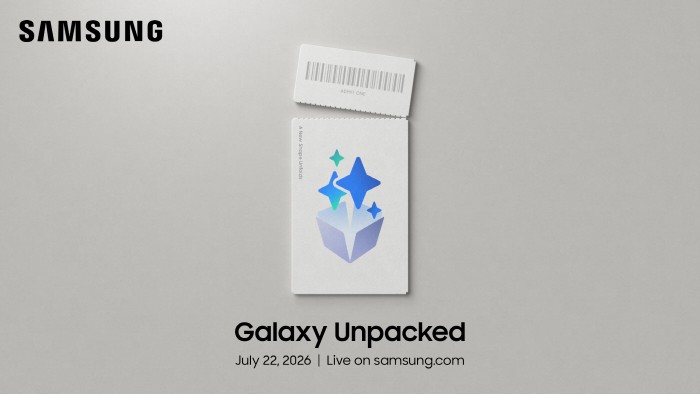 |
| An invitation image for Galaxy Unpacked 2026. / Photo courtesy of Samsung Electronics |
The memory supply shortage triggered by expanding investments in artificial intelligence (AI) data centers is now shaking up the smartphone market. Following Apple, Google has signaled price hikes for its upcoming smartphone lineup, leading industry experts to forecast that Samsung Electronics will also find it difficult to avoid a price increase for the Galaxy Z Fold 8, which is set to be unveiled later this month. Analysts point out that while manufacturers cannot afford to cut down on memory capacity amid intensifying competition in the AI smartphone market, skyrocketing component costs have pushed production costs to their limits.
According to Dealabs, a prominent IT leaks publication, on July 12, Google is expected to raise the prices of its upcoming Pixel 11 series—scheduled for an August reveal—by approximately 100 euros across all models in the European market. The base Pixel 11 is projected to jump from 899 euros to 999 euros, while the Pro and Fold models are anticipated to see a uniform 100-euro increase. Reports suggest the company will bundle this price hike with an upgrade in base storage capacity, shifting from 128GB to 256GB.
With Apple Board Chairman Tim Cook previously stating that price hikes for the new iPhone are inevitable, and Google now joining the ranks, global smartphone manufacturers are effectively shifting the burden of surging memory costs onto consumer retail prices.
Prior to this, Samsung Electronics wrapped up a three-year price freeze by raising prices for the Galaxy S26 series earlier this year, and went on to increase the prices of certain models for the already released Galaxy Z Fold 7 and Flip 7 in April.
Behind these consecutive price hikes lies the supply crunch of AI memory. As demand for High Bandwidth Memory (HBM) explodes, memory manufacturers have concentrated their production capacities on AI-targeted products, resulting in a severe shortage of conventional DRAM and driving up the prices of mobile DRAM used in smartphones.
Market research firm TrendForce projected that conventional DRAM prices, which skyrocketed 90% to 95% quarter-on-quarter in the first quarter of this year, will climb an additional 13% to 18% in the third quarter. NAND flash prices are also forecast to rise 10% to 15% during the same period.
Counterpoint Research noted that memory prices surged by 40% to 50% in the fourth quarter of last year and the first quarter of this year, and are expected to remain elevated through the end of the year. Firms like IDC and Morgan Stanley have raised the possibility that the memory supply shortage could persist until 2027.
This spike in memory prices is reshaping the cost structure of smartphones. According to Counterpoint, the share of memory costs in the manufacturing bill of materials (BOM) for an 800-dollar smartphone expanded from around 14% in the first quarter of last year to 40% recently. For the exact same model, the combined cost of DRAM and NAND leaped more than fourfold, shifting from approximately 63 dollars to 291 dollars.
The core dilemma for manufacturers is that cutting down on memory capacity is not an option in the era of AI smartphones. As agentic AI capabilities expand, more memory is required to execute on-device AI computing smoothly. Industry observers believe this leaves manufacturers with no choice but to pass a portion of the rising production costs on to product pricing.
Against this backdrop, the spotlight is shifting to the pricing of Samsung Electronics' Galaxy Z Fold 8, which will be unveiled on July 22. Industry insiders expect that even if Samsung maintains the base model's US price at 1,999 dollars—matching its predecessor—price hikes for high-capacity models will be virtually unavoidable due to the impact of rising memory component costs.
"The current price hikes are a structural issue affecting the entire industry due to the shortage of AI memory, rather than a strategy unique to any specific company," an industry official stated. "Until HBM demand stabilizes or the effects of memory facility expansions kick in, upward pressure on smartphone prices is highly likely to persist."
Lee Ji-sun
Most Read
-
1
Kia Sportage outperforms Mazda CX-5 in German auto..

-
2
Houthis launch successive attacks on Saudi airport..

-
3
Saudi Arabia, Iran hold first diplomatic talks to..

-
4
U.S. deploys carrier, 10,000 more troops to Middle..

-
5
Saudi airport in Riyadh struck again, leaving at l..

-
6
Japan tracks Ukraine fiber-optic drones, bolsters..

-
7
Putin's ally visits China on the 8th ahead of APEC..

PEOPLE






HEADLINE NEWS

-
Address : In-Young Bldg., 34, Uisadang-daero 1-gil, Yeongdeungpo-gu, Seoul
Copyright by ASIATODAY CO., LTD. All rights resereved