



Ceasefire MOU at risk as U.S. and Iran trade retaliatory strikes
Jul 13, 2026, 09:12 am


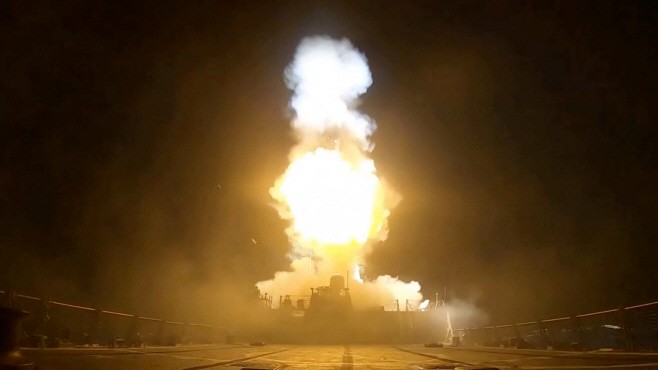 |
| A projectile from the U.S. Central Command (CENTCOM) is launched toward Iran on November 11 (local time) in this image captured from a video released by CENTCOM. / Reuters, Yonhap |
The U.S. Central Command (CENTCOM) struck Iranian missile and air defense systems as well as Islamic Revolutionary Guard Corps (IRGC) fast attack craft around the Strait of Hormuz on November 12 (local time).
The attack, which marks the fourth round of airstrikes this week, came as a retaliation against Iran's resumption of attacks on commercial vessels on November 7. Iran retaliated by targeting U.S. military facilities in Jordan, Kuwait, Bahrain, Qatar, and Oman with missiles and drones, while both sides released conflicting claims regarding whether the strait remains open.
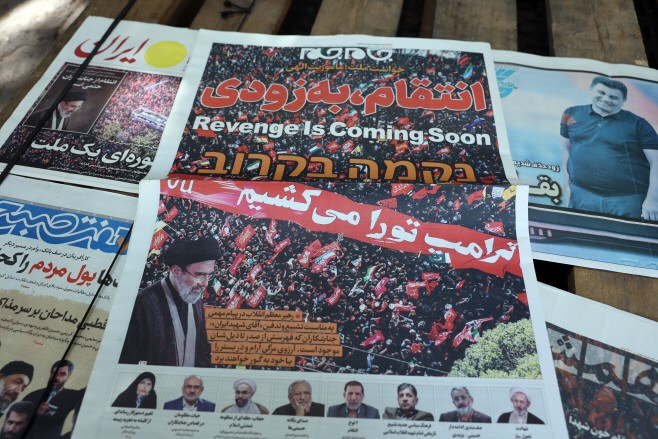 |
| An issue of the Iranian daily Jamejam, featuring photos of the funeral of the late Iranian Supreme Leader Ayatollah Ali Khamenei and the new Supreme Leader Ayatollah Mojtaba Khamenei under the headline "Revenge is Coming," is displayed outside a newsstand in Tehran, Iran, on November 12 (local time). / EPA, Yonhap |
US strikes Iranian missiles, air defenses, and IRGC craft in 4th raid since July 7
The U.S. Central Command attacked Iranian missile and air defense systems alongside IRGC fast attack craft at multiple locations around the Strait of Hormuz, Axios reported, citing a U.S. official. CENTCOM explained that the operation aimed to further degrade Iran's capability to attack commercial vessels.
Just the previous evening, CENTCOM mobilized fighter jets, drones, and warships to strike approximately 140 Iranian military targets, including missile and drone bases, ammunition depots, communication networks, and coastal surveillance facilities. Iran's state-run IRNA news agency reported that while 10 to 11 projectiles hit military facilities on Qeshm Island, no casualties were reported. U.S. Defense Secretary Pete Hegseth stated, "Iran made the wrong choice. Now they pay the price."
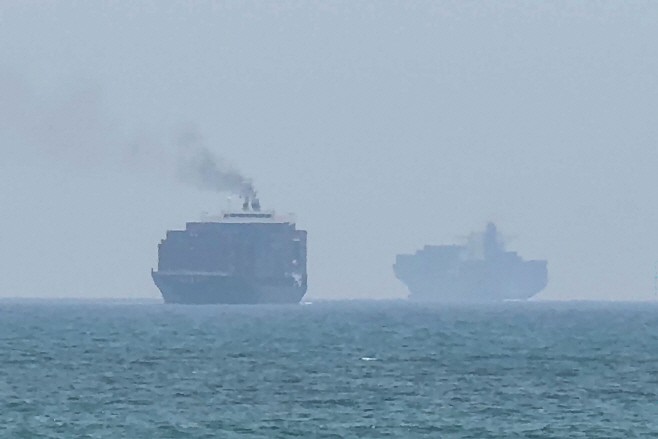 |
| Cargo ships are anchored near the Strait of Hormuz off Khor Fakkan on the eastern coast of the United Arab Emirates (UAE) on July 12 (local time) in this image captured from an AFPTV video. / AFP, Yonhap |
Iran strikes container ship off Oman, leaves one Indian sailor missing; retaliates against US facilities in 5 Gulf nations
The confrontation escalated after the IRGC attacked the Cyprus-flagged container ship M/V GFS Galaxy 9 nautical miles (16.7 km) off the coast of Oman the previous day. The vessel's engine room sustained heavy damage and caught fire. While 23 crew members were rescued, one Indian sailor went missing. Iran subsequently launched strikes against U.S. military facilities in Jordan, Kuwait, Bahrain, Qatar, and Oman. In Qatar, three people, including a child, were injured by shrapnel, and one worker at a Kuwaiti offshore drilling facility was also wounded. Explosions were also heard in the United Arab Emirates (UAE), and the UAE Ministry of Defense stated it activated its air defense systems in response to missile threats from beyond its borders.
Trump says Iran deployed drones and vessels an hour after deal; Iranian negotiator Ghalibaf warns to keep promises or face consequences
In an interview with NBC on the same day, U.S. President Donald Trump said, "We bombed the hell out of them last night. They are very evil and crazy people."
President Trump claimed that while Iran had agreed to a "perfect deal" heavily favoring the United States and gave up everything, they launched drones and deployed vessels less than an hour after leaving the meeting room.
Iran did not confirm that it had agreed to a new deal. Mohammad Bagher Ghalibaf, the Speaker of the Iranian Parliament, warned via X, "The era of unilateral agreements is over. We have already said it. Keep your promises, or you will pay the price. It is time to face reality."
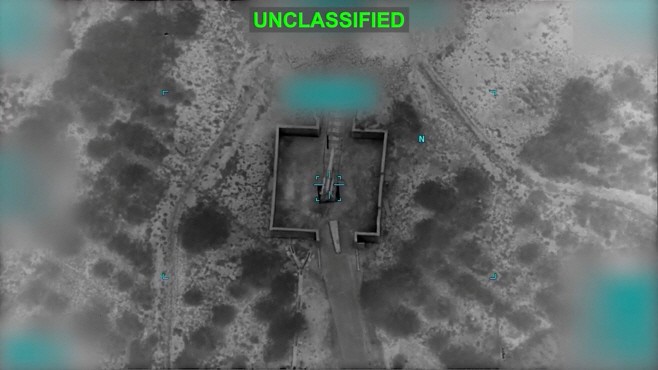 |
| An image from a video released by the U.S. Central Command (CENTCOM) shows a projectile striking a target in Iran on July 11 (local time). / Photo by Reuters, Yonhap |
CENTCOM says shipping lanes open while Iran claims passage impossible; UN warns of total war
CENTCOM stated that Iran does not control the strait and shipping continues to flow, adding it stands ready to ensure lawful passage. The Joint Maritime Information Center (JMIC) confirmed that the southern route off the coast of Oman remains open despite Iran's declaration of a blockade, though it maintained the threat level for the strait at "severe." Conversely, the Persian Gulf and Strait Agency (PGSA) of Iran maintained its permit-only system, claiming that illegal movements by the U.S. military have rendered passage impossible.
Iranian Foreign Minister Abbas Araghchi met with Omani Foreign Minister Badr bin Hamad Albusaidi and a Qatari mediation team in Muscat the previous day to discuss transit options, but failed to reach a breakthrough.
Oman summoned the Iranian ambassador after its territory came under a drone attack the day after the talks. The AP reported that this marks the first summoning since the outbreak of the war. UN Secretary-General António Guterres warned that a return to full-scale war would bring catastrophic consequences for the regional and global economy.
Ha Man-joo
Most Read
-
1
Celltrion’s Omlyclo gains ground in major European..

-
2
Trump demands rates fall below 1% as Fed hikes for..

-
3
Trump makes $1 trillion bet ahead of midterm elect..

-
4
Iran resumes ballistic missile production, assembl..

-
5
Samsung Electronics, Mistral AI to jointly develop..

-
6
Trump warns countries not helping U.S. must pay re..

-
7
Apple launches first foldable, 1 million won prici..

PEOPLE






HEADLINE NEWS
- Trump to roll out ‘unprecedented welcome’ for Xi with B-2 bombers, F-22 fighters
- S. Korea, U.S., and Japan form united front on Taiwan and economic coercion..
- Trump administration moves to impose sweeping sanctions on International Cr..
- Xi to make state visit to U.S. Sept. 23-25, dispelling rumors over his heal..

-
Address : In-Young Bldg., 34, Uisadang-daero 1-gil, Yeongdeungpo-gu, Seoul
Copyright by ASIATODAY CO., LTD. All rights resereved