



US attacks Iran's military facilities and Iran retaliates, fueling Middle East tensions
Jun 01, 2026, 05:19 pm


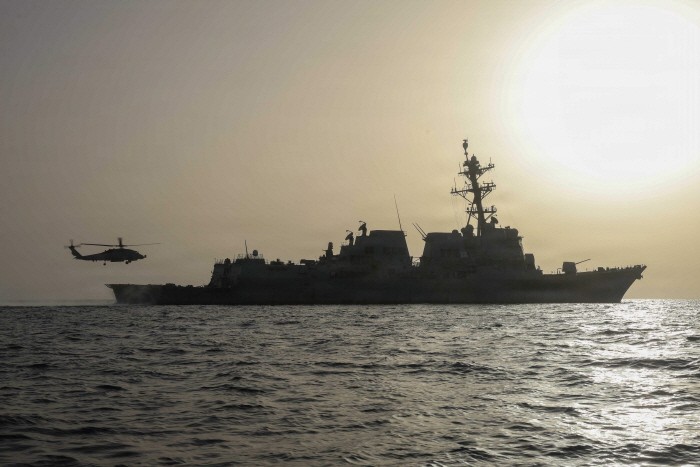 |
| An MH-60R Seahawk assigned to Helicopter Maritime Strike Squadron (HSM) 50 takes off from the flight deck of the guided-missile destroyer USS Thomas Hudner on November 28 (local time). / Photo via AFP, Yonhap News |
Amid stalled peace negotiations between the United States and Iran, the U.S. has reportedly launched another wave of air strikes targeting Iranian military facilities.
On June 1 (local time), U.S. Central Command announced that it had bombed radar and drone control installations on Iran's Gorukh and Qeshm islands between May 30 and 31, the AP reported.
The U.S. military explained that the strikes were executed in self-defense following Iran's downing of a U.S. MQ-1 drone that had been operating in international airspace.
U.S. fighter jets scrambled immediately to neutralize Iranian air defense networks, ground control stations, and two attack drones. The military added that no U.S. personnel casualties were reported in the operation.
Iran retaliated without delay. The Islamic Revolutionary Guard Corps (IRGC) claimed through the state-run IRNA news agency that the U.S. had targeted its communication towers, adding that it had launched a retaliatory strike without specifying the exact location.
The AP noted that this likely referred to an attack on Kuwait, which hosts the U.S. Army Central command—a facility serving as a forward headquarters in the Middle East.
Kuwait also announced that it activated its air defense systems early that morning to intercept drones and missiles penetrating its airspace.
Kuwaiti authorities raised the possibility that the attack was orchestrated by Iranian forces or backed by Shiite militias operating within Iraq.
The AP added that this latest exchange of strikes highlights the extreme fragility of the weeks-long ceasefire between the U.S. and Iran, demonstrating that hostilities continue to erupt even as both nations negotiate an extension of the truce.
Park Jin-sook
Most Read
-
1
Celltrion’s Omlyclo gains ground in major European..

-
2
Trump demands rates fall below 1% as Fed hikes for..

-
3
Trump makes $1 trillion bet ahead of midterm elect..

-
4
Iran resumes ballistic missile production, assembl..

-
5
Samsung Electronics, Mistral AI to jointly develop..

-
6
Trump warns countries not helping U.S. must pay re..

-
7
Apple launches first foldable, 1 million won prici..

PEOPLE






HEADLINE NEWS
- Trump to roll out ‘unprecedented welcome’ for Xi with B-2 bombers, F-22 fighters
- S. Korea, U.S., and Japan form united front on Taiwan and economic coercion..
- Trump administration moves to impose sweeping sanctions on International Cr..
- Xi to make state visit to U.S. Sept. 23-25, dispelling rumors over his heal..

-
Address : In-Young Bldg., 34, Uisadang-daero 1-gil, Yeongdeungpo-gu, Seoul
Copyright by ASIATODAY CO., LTD. All rights resereved