



Samsung to set up R&D center in China for ADC development
May 29, 2026, 04:24 pm


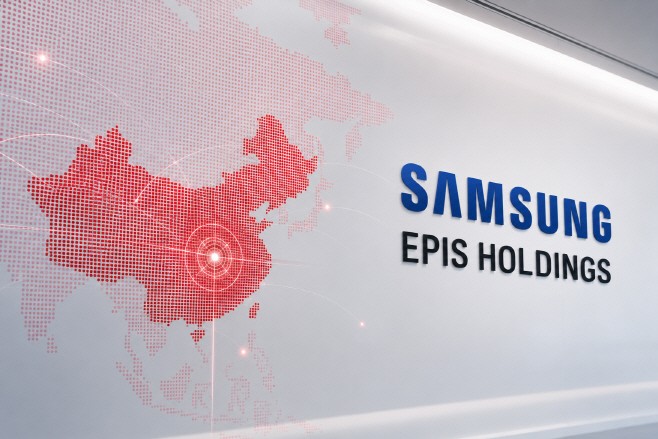 |
| An image generated by AI. |
Samsung Epis Holdings is spearheading an initiative to fortify its novel drug development capabilities by establishing its first global R&D hub in China. The strategic move is designed to actively leverage elite local talent and advanced technological infrastructure in China, which has rapidly emerged as a prominent global hub for innovative drug discovery. Industry observers note that China’s expanding dominance in the antibody-drug conjugate (ADC) sector—a core therapeutic focus for Samsung Bioepis—served as a primary catalyst for the investment.
Samsung Epis Holdings announced on May 29 that it has incorporated "Samsung Biological Science and Technology (China) Co., Ltd." in the Changping District of Beijing as a wholly-owned subsidiary dedicated to biopharmaceutical research and development. Using this corporate vehicle, the company plans to officially inaugurate the "Samsung Bioepis China R&D Center" this coming June and immediately initiate local talent acquisition.
The establishment marks the first time Samsung Epis Holdings has anchored an R&D facility outside of South Korea. Analysts evaluate that China was selected as the maiden outpost to capitalize on the country's exponentially growing biotechnology ecosystem. As China cements its position as both a vital source for novel drug pipelines and an operational R&D nexus, global pharmaceutical conglomerates are progressively scaling up localized capital deployments.
The competitive edge China commands in the ADC landscape stands out as a critical driver behind the expansion. Within its novel drug development portfolio, Samsung Bioepis is channeling maximum corporate resources into ADCs, widely regarded as next-generation targeted cancer therapies. Data from market research firm Evaluate reveals that approximately 51% of all ADC pipelines currently undergoing clinical trials worldwide are Chinese assets. Consequently, the localized presence is interpreted as a tactical move to scout premium candidate molecules and scale up open innovation frameworks on the ground.
In line with this trajectory, Samsung Bioepis has been steadily deepening its integration into the Chinese biotech matrix. In October of last year, the company inked a joint research partnership with China-based Frontline Biopharma, an entity equipped with proprietary ADC technological platforms and therapeutic assets. This past April, it signed a memorandum of understanding (MOU) with the ATLATL Innovation Cluster to aggressively drive global open innovation initiatives.
The Changping District, where the new R&D center will be situated, represents a cornerstone node within the Jing-Jin-Ji (Beijing-Tianjin-Hebei) megacity cluster, one of China’s top three biotechnology corridors. The district hosts the Zhongguancun Life Science Park—a specialized high-tech industrial zone—and sits in close proximity to elite academic institutions including Peking University and Tsinghua University. This strategic positioning provides a highly favorable environment for securing premium research infrastructure and top-tier scientific personnel. Furthermore, the ATLATL Beijing Frontier Innovation Center is located nearby, which is expected to facilitate seamless open innovation collaborations moving forward.
Prior to incorporating the new mainland subsidiary, Samsung Bioepis systematically liquidated its legacy corporate entities in Hong Kong and Taiwan. Those units were originally set up to manage biosimilar commercialization but were dissolved following prolonged operational dormancy. Unlike those previous commercial outposts, the newly formed Chinese entity is structurally mandated to spearhead novel drug R&D, a pivot that market experts view as a definitive indicator of a broader strategic shift within Samsung Epis Holdings.
"The establishment of the China R&D Center marks an aggressive global expansion aimed at supercharging our research and development competencies," stated Kim Kyung-ah, CEO of Samsung Epis Holdings. "By actively integrating China’s exceptional human capital and advanced technological infrastructure, we will intensely focus on scaling up our operational capabilities to engineer next-generation innovative biologics."
Bae Da-hyun |
Most Read
-
1
Kia Sportage outperforms Mazda CX-5 in German auto..

-
2
Houthis launch successive attacks on Saudi airport..

-
3
Saudi Arabia, Iran hold first diplomatic talks to..

-
4
U.S. deploys carrier, 10,000 more troops to Middle..

-
5
Saudi airport in Riyadh struck again, leaving at l..

-
6
Putin's ally visits China on the 8th ahead of APEC..

-
7
Chinese military support and training center opens..

PEOPLE






HEADLINE NEWS

-
Address : In-Young Bldg., 34, Uisadang-daero 1-gil, Yeongdeungpo-gu, Seoul
Copyright by ASIATODAY CO., LTD. All rights resereved