



US and Iran reach tentative deal to extend ceasefire, await Trump approval
May 29, 2026, 09:40 am


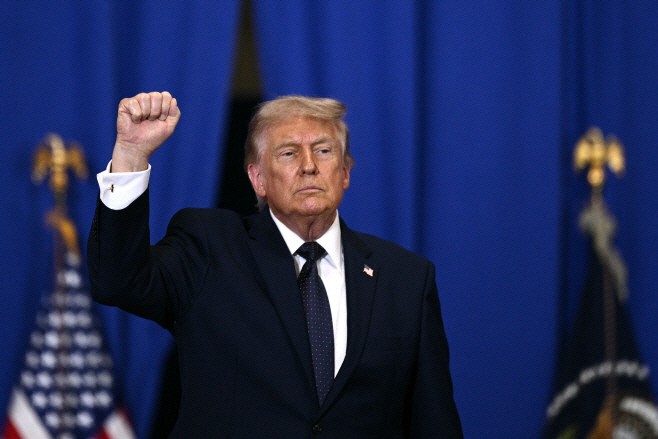 |
| Donald Trump raises his fist as he departs after delivering an economic speech at Rockland Community College Fieldhouse in Suffern, New York, on May 22. /AFP-Yonhap |
The United States and Iran have reportedly reached a tentative agreement on a memorandum of understanding (MOU) aimed at ending the conflict between the two countries, centered on a 60-day ceasefire extension and the normalization of shipping through the Strait of Hormuz.
According to reports by Reuters and Axios on May 28, the draft agreement still requires final approval from Donald Trump. However, Iran’s semi-official Tasnim News Agency disputed claims that the text has been finalized, citing sources familiar with the negotiations.
Draft includes Hormuz reopening, sanctions relief and nuclear talks
The proposed framework would extend the fragile ceasefire that has been in place since early April by an additional 60 days following the outbreak of hostilities on Feb. 28.
The draft reportedly calls for shipping traffic through the Strait of Hormuz to return to pre-war levels within 30 days without transit fees. It also includes the launch of negotiations over Iran’s nuclear program during the ceasefire period.
In return, the United States would ease certain restrictions on Iran, including granting access to up to $12 billion in frozen assets. Reuters reported that the proposal also includes the lifting of the U.S. blockade on Iranian ports and partial relief from sanctions related to Iranian oil exports.
The framework is also said to contain provisions for maintaining a ceasefire between Israel and the Iran-backed Lebanese group Hezbollah. The development comes as Israel has intensified military operations in Lebanon while broader regional negotiations continue.
Axios reported that most terms of the agreement had been settled by May 26 and approved by Iranian leadership, but Trump requested additional time before making a final decision.
Future negotiations are expected to focus on Iran’s stockpile of highly enriched uranium, limits on further enrichment, oversight by the International Atomic Energy Agency, and commitments regarding nuclear weapons development.
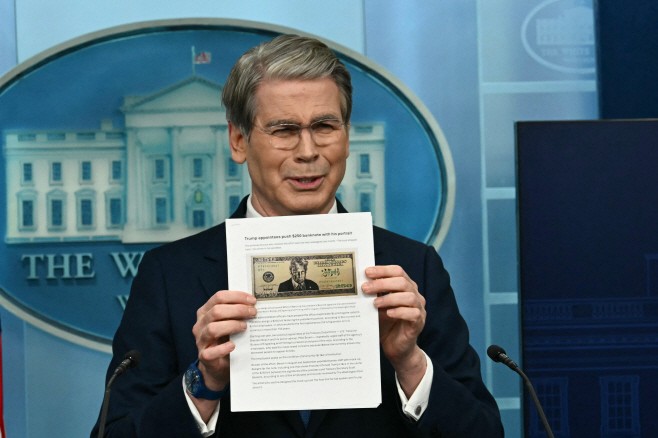 |
| Scott Bessent, U.S. Treasury Secretary, speaks during a press briefing at the White House in Washington, D.C., on May 28. /AFP-Yonhap |
US officials express cautious optimism
J. D. Vance said negotiators were still discussing “a couple of language points” regarding Iran’s nuclear capabilities but described Tehran as engaging in the talks in good faith.
“I can’t guarantee it, but I’m fairly optimistic at this point,” Vance told reporters. “We’re not there yet, but we’re very close and will keep working.”
Meanwhile, Scott Bessent declined to confirm the existence of a final agreement during a White House briefing, saying that any deal would depend on what Trump ultimately decides.
Bessent reiterated U.S. red lines, including the transfer of highly enriched uranium, a commitment not to pursue nuclear weapons and guarantees of free navigation through the Strait of Hormuz. He stressed that sanctions relief would not be considered until Iran agrees to those principles.
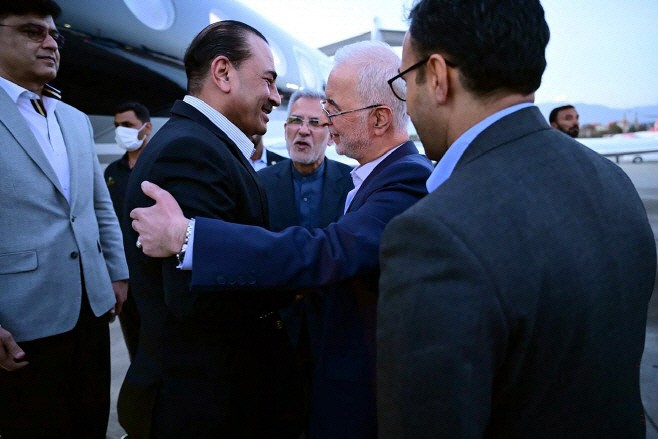 |
| In this photo released by Pakistan’s military media wing, the Inter-Services Public Relations (ISPR), Asim Munir (second from left), Pakistan’s army chief, is welcomed by Eskandar Momeni upon his arrival in Tehran on May 22 as part of mediation efforts related to ceasefire negotiations between Iran and the United States. /AFP-Yonhap |
Iran denies agreement has been finalized
Tasnim quoted a source involved in the negotiations as saying reports that only formal announcements remained before implementation were inaccurate.
“The text has not been finalized, and Iran has not informed the Pakistani mediators that an agreement has been completed,” the source said.
Fada-Hossein Maleki said negotiations had made “significant progress,” but added that Washington had yet to make decisions on several Iranian conditions.
Pakistan, which has played a mediating role throughout the talks, is expected to continue diplomatic efforts. Reuters reported that Pakistani Foreign Minister Mohammad Ishaq Dar is scheduled to meet with U.S. Secretary of State Marco Rubio in Washington on May 29 to discuss international developments and ongoing mediation efforts.
#United States #Iran #ceasefire #Donald Trump #Hormuz Strait
Copyright by Asiatoday
Most Read
-
1
U.S. Treasury Secretary Bessent publicly warns ove..

-
2
Celltrion’s Omlyclo gains ground in major European..

-
3
Hyundai Motor Group breaks ground on integrated st..

-
4
Russia faces warning signs over prolonged war econ..

-
5
Anti-Western solidarity strengthens amid Trump's e..

-
6
U.S. strikes 3 Iranian oil tankers, Iran vows reta..

-
7
S. Korea seeks redemption from World Cup setback w..

PEOPLE







-
Address : In-Young Bldg., 34, Uisadang-daero 1-gil, Yeongdeungpo-gu, Seoul
Copyright by ASIATODAY CO., LTD. All rights resereved