



Trump vows harsher attack on Iran if negotiations collapse
May 26, 2026, 08:30 am


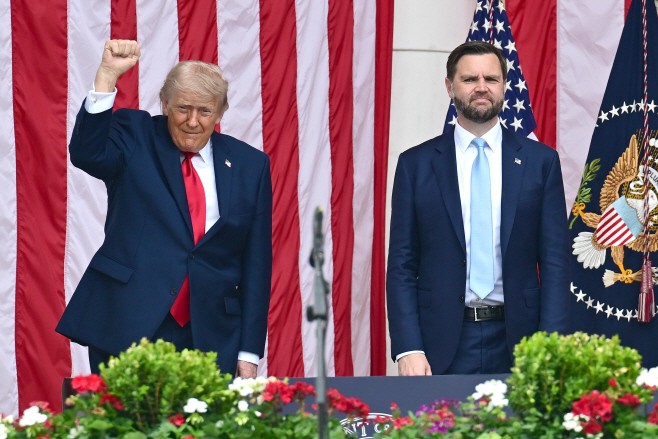 |
| U.S. President Donald Trump raises his fist toward attendees before delivering remarks after laying a wreath at the Tomb of the Unknown Soldier during a Memorial Day ceremony at Arlington National Cemetery in Virginia on May 25. On the right is Vice President J. D. Vance. /UPI-Yonhap |
Negotiations between the United States and Iran over extending a ceasefire and reopening the Strait of Hormuz are facing last-minute friction over the sequencing of nuclear restrictions and sanctions relief, according to a report by The Wall Street Journal.
While U.S. President Donald Trump declared that talks were “going smoothly,” both sides remain divided over whether Iran must first curb its nuclear activities or receive guarantees of sanctions relief before taking further steps.
According to reports from the WSJ, Reuters and AP, Washington and Tehran are discussing a memorandum of understanding (MOU) that would extend the current ceasefire for 60 days and gradually reopen the Strait of Hormuz during that period. Japan’s Nikkei newspaper reported that the strait could reopen roughly 30 days after a final agreement, following Iranian mine-clearing operations.
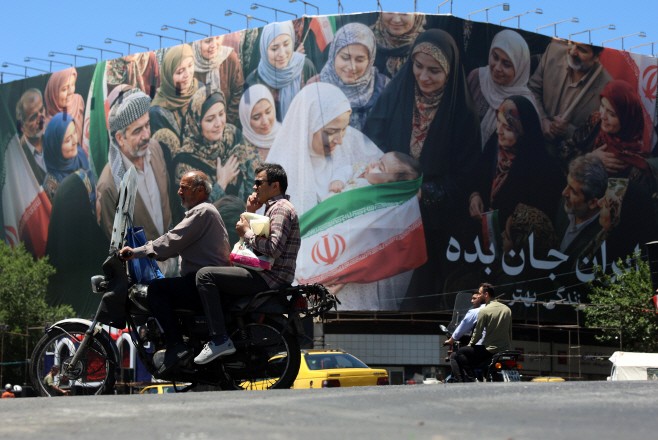 |
| Iranian citizens walk past a large billboard in Tehran on May 25. /EPA-Yonhap |
The Iran side reportedly agreed not to impose transit fees during the temporary reopening period, although Tehran continues to insist on maintaining management authority over the waterway and charging for maritime services and environmental protection measures.
Gulf countries including Saudi Arabia and the United Arab Emirates are reportedly demanding explicit guarantees of free navigation through the strait in the MOU.
Nuclear dispute remains unresolved
The biggest sticking point remains Iran’s nuclear program.
U.S. officials are demanding that Tehran first implement concrete restrictions on uranium enrichment before any sanctions relief can be considered. Iran, however, insists that sanctions easing and access to frozen overseas assets must come first.
A senior U.S. official told CNN, “No dust, no dollars,” signaling that Washington will not offer sanctions relief unless Iran addresses its stockpile of highly enriched uranium. According to the International Atomic Energy Agency, Iran currently possesses 440.9 kilograms of uranium enriched to 60%, close to weapons-grade levels.
Speaking at a Memorial Day ceremony at Arlington National Cemetery, Trump paid tribute to 13 U.S. service members killed during Operation Epic Fury and declared that “Iran will never have a nuclear weapon.”
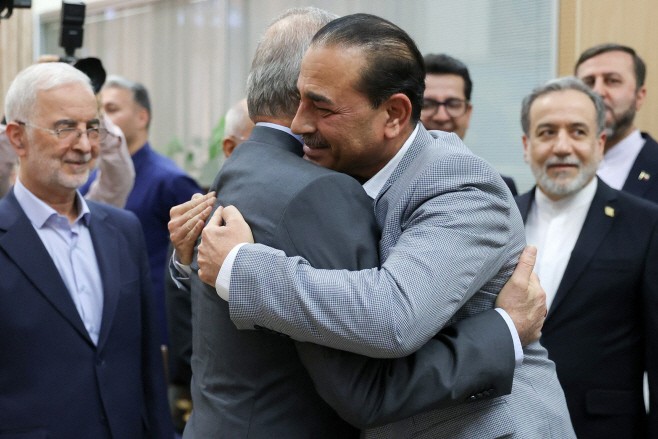 |
| Iranian President Masoud Pezeshkian (second from left) embraces Pakistan Army Chief Asim Munir (third from left) in Tehran on May 23. On the right is Iranian Foreign Minister Abbas Araghchi. /AFP-Yonhap |
Iranian Foreign Ministry spokesman Esmail Baghaei acknowledged that “substantial agreement” had been reached on parts of the agenda but cautioned that no final signing was imminent. He criticized Washington’s “institutional instability,” citing the U.S. withdrawal from the 2015 nuclear deal and recent military strikes during ongoing negotiations.
Iran also emphasized that detailed nuclear discussions would only begin during a separate 60-day negotiation process after the MOU is signed.
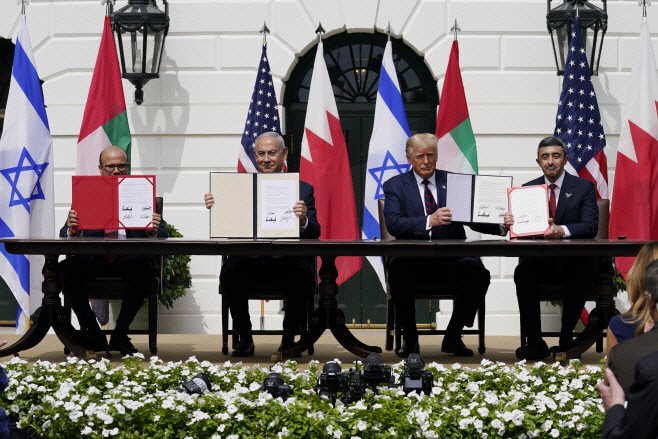 |
| Foreign ministers and leaders including UAE Foreign Minister Sheikh Abdullah bin Zayed Al Nahyan, Israeli Prime Minister Benjamin Netanyahu, U.S. President Donald Trump, and Bahrain Foreign Minister Abdullatif bin Rashid Al Zayani hold the signed Abraham Accords document at the White House on Sept. 15, 2020. /AP-Yonhap |
Trump pressures regional states on Abraham Accords
Amid criticism from Republican hardliners who fear the agreement may leave Iran’s regional influence intact, Trump also intensified pressure on regional countries to join the Abraham Accords.
Posting on Truth Social, Trump argued that Saudi Arabia, Qatar, Pakistan, Turkey, Egypt and Jordan should be required to normalize relations with Israel.
Pakistani sources rejected the linkage, saying mediation efforts involving Iran “cannot and should not” be tied to the Abraham Accords framework.
Saudi Arabia also reportedly reaffirmed that normalization with Israel remains impossible without a credible pathway toward Palestinian statehood.
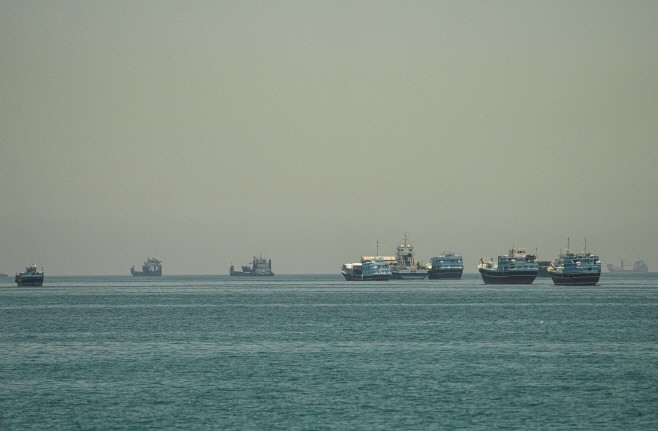 |
| Ships are anchored in the Strait of Hormuz off Musandam, Oman, on May 25. /Reuters-Yonhap |
Oil prices plunge on Hormuz reopening hopes
Markets reacted sharply to growing expectations of a deal.
Brent crude futures fell 7.15% to $96.14 per barrel on London’s ICE exchange, while West Texas Intermediate crude dropped 6.51% to $90.31 in New York trading.
Despite the optimism, analysts warned that restoring normal shipping operations could take months. The The New York Times reported that around 1,500 vessels and roughly 20,000 crew members remain stranded in the Persian Gulf after nearly three months of disruption.
Shipping executives and maritime risk analysts said mine-clearing operations, elevated insurance costs and severe congestion would likely limit recovery of shipping traffic to only 40–50% of normal capacity within the first month after reopening.
#Trump #Iran #Hormuz Strait #nuclear talks #sanctions relief
Copyright by Asiatoday
Most Read
-
1
Celltrion’s Omlyclo gains ground in major European..

-
2
Trump demands rates fall below 1% as Fed hikes for..

-
3
Trump makes $1 trillion bet ahead of midterm elect..

-
4
Iran resumes ballistic missile production, assembl..

-
5
Samsung Electronics, Mistral AI to jointly develop..

-
6
Trump warns countries not helping U.S. must pay re..

-
7
Apple launches first foldable, 1 million won prici..

PEOPLE





HEADLINE NEWS
- Trump to roll out ‘unprecedented welcome’ for Xi with B-2 bombers, F-22 fighters
- S. Korea, U.S., and Japan form united front on Taiwan and economic coercion..
- Trump administration moves to impose sweeping sanctions on International Cr..
- Xi to make state visit to U.S. Sept. 23-25, dispelling rumors over his heal..

-
Address : In-Young Bldg., 34, Uisadang-daero 1-gil, Yeongdeungpo-gu, Seoul
Copyright by ASIATODAY CO., LTD. All rights resereved