



Experts Warn Against Politicized Judicial Reform
Dec 18, 2025, 08:56 am


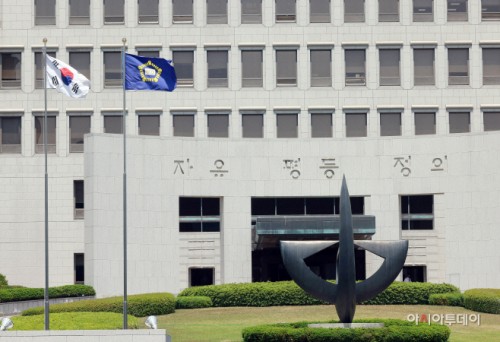 |
| The exterior of the Supreme Court of Korea. / Photo by Park Sung-il |
As the ruling party presses ahead with judicial reform, South Korea’s courts are facing mounting turbulence. From October 29 through December 16, Asia Today interviewed four prominent figures in a special series asking which path judicial reform should take. All four pointed to a single direction: reform grounded in the Constitution and oriented solely toward the people.
Constitutional law scholar Kim Sang-gyeom, emeritus professor at Dongguk University, argued that delays in trials should be addressed not through a simple quantitative expansion such as increasing the number of Supreme Court justices, but through qualitative reform — strengthening lower courts and adopting a selective appeals system. Regarding proposals to introduce a constitutional complaint against court rulings, which has fueled debate over a potential four-tier court system, Kim warned that turning the Constitutional Court into a de facto superior judicial body could destabilize the judicial order.
“The legislature can impeach the judiciary and the executive, but there is almost no check on the legislature,” Kim said, stressing that without balance, the judiciary could be transformed into a channel for political intervention. He cautioned that reform could easily turn into deterioration, or even lead to the destruction of the state, depending on its intent.
Lim Dong-han, an attorney at law firm Dongin who previously served as a judge handling a wide range of cases affecting ordinary citizens, also emphasized the need to strengthen fact-finding trials to ensure swift and fair judgments. Clearing backlogs in the first and second trials, he said, would allow judges to deliver deeper and more persuasive rulings. As cases have grown increasingly complex, Lim argued that the ruling party’s reform agenda risks prolonging disputes rather than fulfilling the judiciary’s core mission of protecting citizens’ rights. He also voiced concern that proposals such as the so-called “distortion of justice” offense — which would criminalize aspects of trial proceedings or rulings — could undermine constitutional guarantees of judicial independence and make conscience-based judgments difficult.
Hwang Doo-soo, a professor at Konkuk University who served for many years as a constitutional researcher, acknowledged that it may be difficult to stop the dominance of a powerful ruling party. Even so, he said the judiciary must continue to speak out against unconstitutional legislation passed by the National Assembly. Hwang strongly criticized the government’s judicial reform drive, saying it “strips the chief justice of powers guaranteed by the Constitution and builds an authoritarian system.” He described the separation of powers as the final safeguard against dictatorship, warning that the current reform amounts to reshaping the judicial system to suit the ruling party’s preferences — effectively a “takeover of the judiciary” and the “completion of authoritarian rule.”
Another constitutional scholar, Cha Jin-a, professor at Korea University, went further, defining the ruling party’s judicial reform not as institutional improvement but as turning the judiciary into “a handmaiden of power.” In his view, the bills are fundamentally tainted in motive, aimed at forcing the courts into total submission to the current administration. On the proposed creation of special tribunals for insurrection-related cases, Cha argued that they would result in “people’s trials” with predetermined outcomes, stripping proceedings of fairness. He also said plans to abolish the National Court Administration run counter to the Constitution, which vests judicial power in the courts.
“Only public opinion can stop the ruling party’s legislative rampage,” Cha said, while also pointing to the opposition’s responsibility to educate and inform the public.
Ultimately, all four experts agreed that judicial reform must move in a direction that protects the Constitution — the supreme law that safeguards citizens’ freedom and rights. Just as Article 1 of the Constitution states that sovereignty resides in the people and that all power comes from the people, they said judicial reform must be driven not by the convenience of those in power but by the rights of citizens themselves.
#judicial reform #Constitution of Korea #separation of powers #Supreme Court
Copyright by Asiatoday
Most Read
-
1
Celltrion’s Omlyclo gains ground in major European..

-
2
Trump demands rates fall below 1% as Fed hikes for..

-
3
Hyundai Motor Group breaks ground on integrated st..

-
4
U.S. strikes 3 Iranian oil tankers, Iran vows reta..

-
5
Trump makes $1 trillion bet ahead of midterm elect..

-
6
Iran resumes ballistic missile production, assembl..

-
7
Samsung Electronics, Mistral AI to jointly develop..

PEOPLE







-
Address : In-Young Bldg., 34, Uisadang-daero 1-gil, Yeongdeungpo-gu, Seoul
Copyright by ASIATODAY CO., LTD. All rights resereved