



Seoul high schoolers to showcase AI solutions to social problems
Nov 25, 2026, 01:25 pm


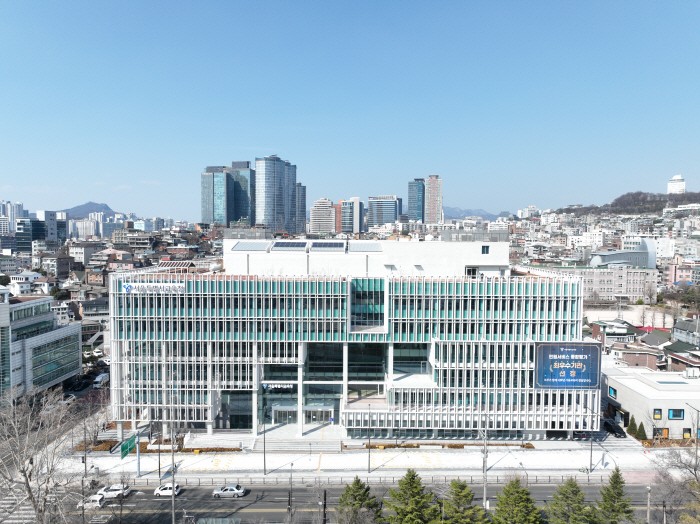 |
| /Seoul Metropolitan Office of Education |
From an artificial intelligence (AI) service that identifies housing risks before signing a jeonse lease to an AI alert system that helps visually impaired people navigate their surroundings, AI technologies developed by high school students in Seoul will be showcased in one place.
The Seoul Metropolitan Office of Education announced on November 25 that it would hold the “2026 Seoul Student AI Development Showcase” at Peace & Park Convention in Yongsan-gu on November 27. The event is designed to go beyond simply teaching students how to use AI and help them develop the skills to design their own AI models and apply them to solving social problems.
A total of 85 students in 30 teams from 17 schools, including schools for gifted students, science high schools, science-focused schools, specialized vocational high schools and Meister high schools, will participate in the event. Drawing on the knowledge and research skills acquired in mathematics and science classes, students will present projects developed through research assignments and club activities.
Eight teams will participate in the advanced research category, presenting projects including an AI agent that independently makes decisions by analyzing user context and intent, an AI model that predicts the properties of chemical molecules, and research on a neural network that separates answer generation from evidence verification.
Twenty-two teams will participate in the problem-solving and application category. Projects to be introduced include an AI housing protection service that identifies housing risks before a contract is signed simply by entering an address, an AI alert system that informs visually impaired people of the location and distance of objects, and an app designed to improve self-efficacy using youth risk indicators and public education data.
Rather than being a competition centered on rankings and awards, the event will focus on sharing research findings and strengthening students' capabilities. Six experts, including university professors and AI specialists from industry, will assess creativity, technical validity and practical value and suggest areas for improvement.
The Seoul Metropolitan Office of Education has established AI literacy, ethics and development skills as the three pillars of AI education. Building on the event, it plans to expand AI project-based education in conjunction with Seoul's mathematics, science and interdisciplinary education initiative (K-STEM) and promote the sharing of research and development practices among schools.
“The thinking skills students have developed through mathematics and science are translating into the ability to develop AI themselves and solve problems in our lives,” Seoul Education Superintendent Jeong Geun-sik said. “I hope this event will give students an opportunity to broaden the possibilities of the AI they have developed through advice from industry professionals and grow into AI developers who think about technology that serves people.”
Park Ji-sook
Most Read
-
1
AMD's Lisa Su floated as potential Nvidia successo..

-
2
China President Xi's Keynote Speech at the APEC C..

-
3
Alice Huang, affair partner of Jensen Huang, repor..

-
4
Iran resumes attacks after two months, targeting U..

-
5
Russian warship sinks in suspected drone attack at..

-
6
Inside Kylin Villa, the symbol of China's reform h..

-
7
Trump, Xi, Putin call for security cooperation at..

PEOPLE




HEADLINE NEWS

-
Address : In-Young Bldg., 34, Uisadang-daero 1-gil, Yeongdeungpo-gu, Seoul
Copyright by ASIATODAY CO., LTD. All rights resereved