



Shanghai party chief Chen Jining falls from power amid corruption probe
Nov 25, 2026, 10:39 am


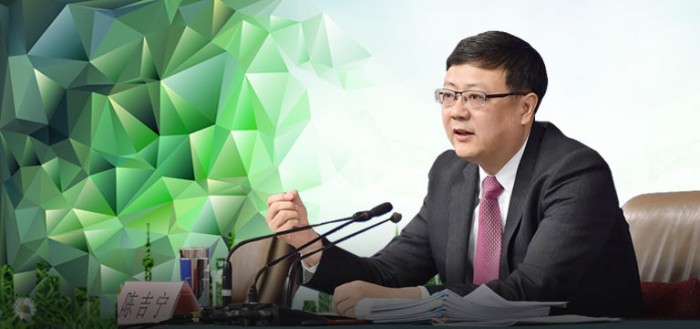 |
| Shanghai Party Secretary Chen Jining was renowned as one of China's leading political figures, brimming with intellectual confidence. His sudden downfall, however, has consigned him to the pages of history. / Xinmin Evening News |
According to a November 24 report by the state-run Xinhua News Agency, Chen, also a member of the 24-member Politburo of the Communist Party of China (CPC) Central Committee, is currently under investigation by the Central Commission for Discipline Inspection (CCDI) and the National Commission of Supervision (NCS) on suspicion of serious violations of discipline and law.
He thus earned the dubious distinction of becoming the fourth Politburo member elected at the 20th CPC National Congress in October 2022 — a party congress held every five years — to fall from power. The other three are He Weidong and Zhang Youxia, former vice chairmen of the Central Military Commission (CMC), and Ma Xingrui, former party secretary of the Xinjiang Uygur Autonomous Region.
According to Beijing sources well versed in the inner workings of China's leadership, Chen had been widely regarded not only as a strong contender for a seat on the seven-member Politburo Standing Committee but also as a leading candidate for premier at the 21st CPC National Congress, scheduled for the second half of next year.
Little more needs to be said, given that Singaporean Senior Minister Lee Hsien Loong, after meeting Chen during a visit to Shanghai in November 2024, told reporters that he had hoped to establish new relationships with China's next generation of leaders. It would be fair to say that even foreign leaders recognized Chen as one of China's next-generation leaders.
Add to this the fact that President Lee Jae-myung met Chen in Shanghai during his visit to China in early January this year, and it becomes clear just how prominent Chen was before his downfall.
A Beijing-based political commentator who requested anonymity lamented Chen's downfall, saying, “There was something different about him compared with other senior party and government leaders. Perhaps it was largely because his academic background made him particularly appealing.”
The commentator's regret is certainly understandable, as is the fact that sources cannot even begin to speculate about the specific reasons for his downfall.
Born in February 1964 in Lishu, Jilin Province, in northeastern China, Chen majored in environmental engineering at Tsinghua University, Xi's alma mater. He went on to complete a master's program at the same university and earned his doctorate from Imperial College London in 1993. After returning to China in 1998, he worked as a professor at his alma mater.
Given his credentials, it was only natural that he became vice president of Tsinghua University in 2006 and rose to executive vice president in 2007, at just 43 years of age.
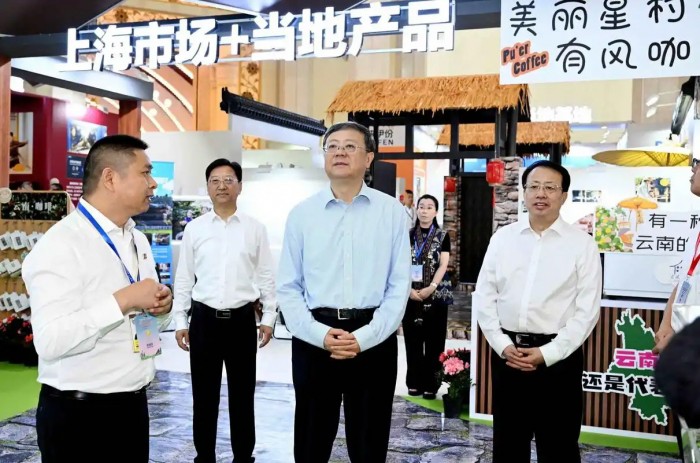 |
| Shanghai Party Secretary Chen Jining during an inspection visit to observe local conditions. / The Beijing News |
His meteoric rise continued thereafter. After serving as president of Tsinghua University, Chen became party secretary and minister of the Ministry of Environmental Protection in 2015, spearheading efforts to combat China's chronic smog problem. He then became mayor of Beijing in 2017, adding local administrative experience to his credentials.
Five years later, at the 20th CPC National Congress in October 2022, he finally secured the coveted position of Politburo member before becoming Shanghai party secretary, succeeding Li Qiang, the current premier of the State Council. Calling his rise meteoric was hardly an exaggeration.
With his latest downfall, however, Chen is now set to face harsh punishment before fading completely into history. The old adage that fortunes can change in unpredictable ways certainly seems apt when it comes to life and power within China's leadership.
Hong Soon-do
Most Read
-
1
AMD's Lisa Su floated as potential Nvidia successo..

-
2
China President Xi's Keynote Speech at the APEC C..

-
3
Alice Huang, affair partner of Jensen Huang, repor..

-
4
Iran resumes attacks after two months, targeting U..

-
5
Russian warship sinks in suspected drone attack at..

-
6
Inside Kylin Villa, the symbol of China's reform h..

-
7
Trump, Xi, Putin call for security cooperation at..

PEOPLE




HEADLINE NEWS

-
Address : In-Young Bldg., 34, Uisadang-daero 1-gil, Yeongdeungpo-gu, Seoul
Copyright by ASIATODAY CO., LTD. All rights resereved