



Supplementary budget to fund AI support for 120,000 disadvantaged high school students
Aug 20, 2026, 10:34 am


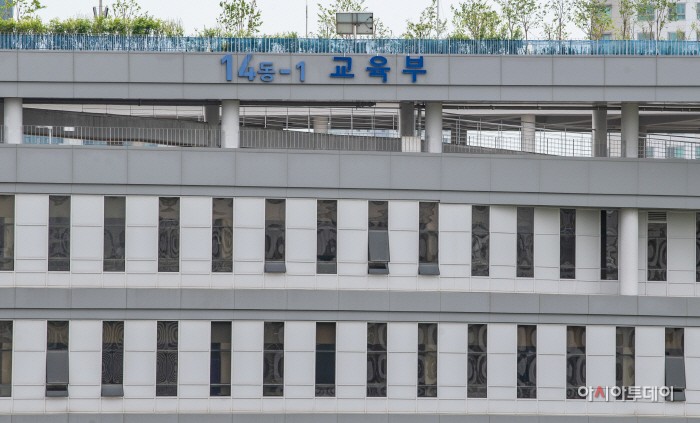 |
| Ministry of Education / Reporter Park Seong-il |
The "2026 AI On-Ieum Project," which provides paid artificial intelligence (AI) services and AI education to 120,000 high school students from vulnerable groups and underserved regions, will newly be carried out through a supplementary budget.
The Ministry of Education and the Korea Student Aid Foundation announced on August 19 that they will accept applications on a school-by-school basis from August 20 to 28.
The support targets are divided into two categories. "Type 1," which covers high school students from disadvantaged backgrounds such as education benefit recipients, will receive primary priority. When a student informs the teacher in charge of their intention to apply, the school proceeds with the school-level application and account issuance process through the Korea Student Aid Foundation. "Type 2," covering high schools located in rural areas including towns and townships, is prioritized next; when a school applies at the institutional level, all students enrolled at selected schools become eligible for support.
Students will be able to access multi-large language model (LLM) AI services fitted with safety features tailored to youth, such as profanity filtering. However, prior to using the service, they must first complete AI ethics and literacy education. Subsequently, step-by-step training will be provided, ranging from the fundamental use of generative AI to prompt drafting and real-life applications. Technical safety measures will also be implemented within the AI service, including blocking the input of prohibited terms. At the end of the semester, students will submit individual usage reports, and changes in their AI literacy will be measured before and after participating in the project.
The Ministry of Education explained that the project was prepared amid concerns that while students' use of AI is growing alongside the spread of AI technology, disparities in service access depending on socioeconomic conditions could lead to gaps in learning and AI capabilities. The selection of schools and students will be completed in August, with actual AI services and educational programs scheduled to be provided starting in September.
Minister Choi Kyo-jin stated, "Artificial intelligence is being utilized as an essential tool across diverse fields, including studies and work. We must provide support starting from the school level to prevent gaps in academic performance and AI capabilities arising from AI services." He added, "Through the AI On-Ieum Project, I hope all students develop the strength to navigate the AI era."
Park Ji-sook
Most Read
-
1
Celltrion nears additional contract with major U.S..

-
2
"Aren't those foreigners on welfare?": M..

-
3
U.S. weighs dropping MOAB, world's most powerful n..

-
4
Houthis launch successive attacks on Saudi airport..

-
5
Saudi Arabia, Iran hold first diplomatic talks to..

-
6
Saudi airport in Riyadh struck again, leaving at l..

-
7
Five ASEAN countries welcome Myanmar coup leader

PEOPLE






HEADLINE NEWS

-
Address : In-Young Bldg., 34, Uisadang-daero 1-gil, Yeongdeungpo-gu, Seoul
Copyright by ASIATODAY CO., LTD. All rights resereved