



Ruling party pushes to scrap supplementary investigations despite rising botched probes
Jul 13, 2026, 09:34 am


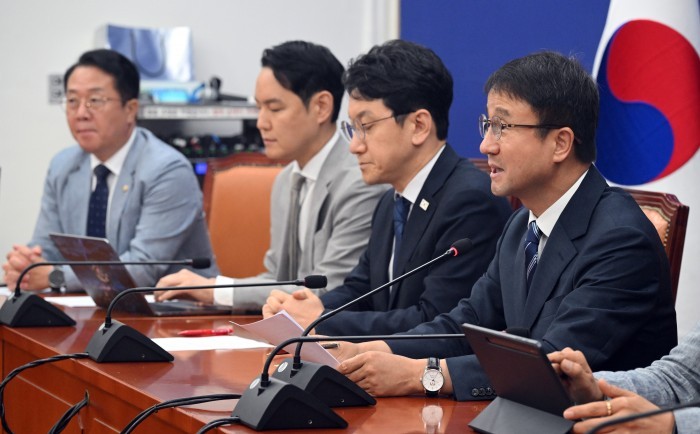 |
| / Photo by Reporter Song Eui-joo |
A swelling police collusion scandal surrounding Jang Yoon-ki—the suspect in the murder of a female high school student in Gwangju—has reignited a fierce political battle over the abolition of the prosecution’s supplementary investigative authority. The ruling People Power Party (PPP) cited the case as textbook proof that the prosecution needs to retain the power to dig deeper into flawed police probes. Conversely, the main opposition Democratic Party of Korea (DPK) demanded a thorough reinvestigation of the murder case but dug in on its core stance to strip prosecutors of the authority.
In May, the police forwarded Jang's case to the prosecution under charges of simple murder. However, during a supplementary probe, prosecutors conducted a rigorous forensic analysis of CCTV footage and upgraded the charges to murder combined with rape. Since then, the case has snowballed into a major scandal involving alleged collusion and tampering with evidence between the suspect's father—a current senior police official—and the initial police investigation team. The head of the Gwangju Gwangsan Police Station’s detective unit has since been arrested on charges of failing to seize zip ties found in the suspect's vehicle that were used to bind the victim.
The PPP quickly framed this development as a prime example of why supplementary investigative powers must be preserved. "The authority to conduct supplementary investigations must remain intact," DPK Representative Jang Dong-hyuk stated on July 12. "The pressing matter is not dismantling the prosecution, but rather reforming the police." The ruling party is reportedly preparing a party-line bill focused on maintaining this investigative authority to ensure that secondary agencies can cross-check police investigations for omissions and errors.
In contrast, the DPK urged a complete reinvestigation into the Gwangju murder but signaled it would move forward with its planned revisions to the Criminal Procedure Act. Party officials argue that even if the prosecution's direct authority to conduct supplementary investigations is revoked, police misconduct can still be checked by strengthening the prosecution’s power to demand supplementary investigations, order corrective measures, and mandate re-investigations by the police.
Nevertheless, internal friction is brewing within the opposition. Some DPK lawmakers are raising concerns that exceptions should be carved out, allowing prosecutors to retain direct supplementary investigative powers for specific categories, such as sex crimes, offenses against children and the disabled, arrest cases, and instances where the statute of limitations is close to expiring.
Minister of Justice Jeong Seong-ho is also known to have expressed worries to DPK members on the National Assembly’s Legislation and Judiciary Committee regarding potential fallout and harm to the general public if the system is completely dismantled.
The DPK aims to finalize the legislative amendments in tandem with the launch of a new prosecution service and a major crime investigative bureau scheduled for this October. While Suh Young-kyo, head of the judiciary committee, vowed to pass the bills before the party's upcoming national convention, the exact timing and scope remain fluid due to internal rifts and government pushback.
On the other side of the aisle, the PPP is using the Gwangju case to gain moral high ground for retaining the current investigative system. However, because the party has boycotted standing committee sessions due to a breakdown in legislative leadership negotiations, it faces limits in actively shaping the bill during committee reviews.
The ultimate fate of the prosecution’s supplementary powers is expected to hinge heavily on the outcome of the DPK’s national convention on August 17. If former leader Jung Cheong-rae—a staunch advocate for complete abolition—takes the party helm, the current hardline bill is highly likely to stay on track. Conversely, if former Prime Minister Kim Min-seok or Representative Song Young-gil wins the leadership race, observers predict the party might pivot toward a compromise that grants limited supplementary investigative powers to the new prosecution service.
Sim Jun-bo
Most Read
-
1
Celltrion nears additional contract with major U.S..

-
2
Putin proposes trilateral U.S.-China-Russia summit..

-
3
U.S. weighs dropping MOAB, world's most powerful n..

-
4
"Aren't those foreigners on welfare?": M..

-
5
Attention centers on APEC for possible Trump-Xi-Pu..

-
6
Saudi Arabia, Iran hold first diplomatic talks to..

-
7
China tightens grip on boosting domestic demand an..

PEOPLE







-
Address : In-Young Bldg., 34, Uisadang-daero 1-gil, Yeongdeungpo-gu, Seoul
Copyright by ASIATODAY CO., LTD. All rights resereved