



Kim Byung-kee resigns to blunt political fallout
Dec 31, 2025, 08:46 am


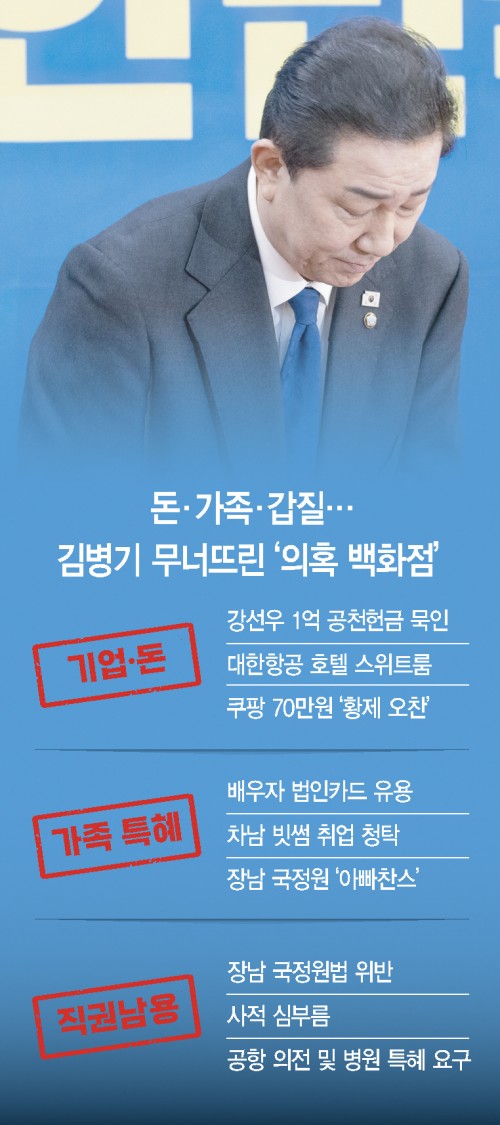 |
The sudden resignation of Kim Byung-kee, floor leader of the ruling Democratic Party, is being interpreted as a strategic move to preserve the governing momentum of the Lee Jae-myung administration and to neutralize a potential political liability ahead of local elections six months away.
Kim had initially vowed to confront allegations head-on, dismissing most of them as groundless. However, as new claims continued to surface—dragging down party approval ratings and threatening to erode public support for the government—he opted for voluntary resignation, party insiders said.
Early allegations involving hotel vouchers and improper dining were widely viewed as personal lapses. The controversy, however, expanded significantly with claims tied to alleged hiring and college admissions irregularities involving family members, as well as accusations that his spouse misused corporate credit cards.
In South Korean politics, allegations of hiring and admissions fraud have long been regarded as a red line for public sentiment, often determining the political fate of senior officials. Former Justice Minister Cho Kuk, now leader of the Cho Kuk Innovation Party, lost his parliamentary seat and was imprisoned after the Supreme Court finalized his conviction over similar family-related admissions scandals last December. The case set a precedent for holding high-ranking officials to strict standards of moral and legal responsibility for family-related risks.
As floor leader of the ruling party, Kim was responsible for translating the administration’s policy agenda into legislation and leading negotiations with the opposition. Critics say his mounting ethical controversies weakened the party’s reform drive, including initiatives such as a special counsel probe into the Unification Church and follow-up measures related to alleged insurrection charges.
Kim’s resignation has also revived talk of a recurring “curse” surrounding floor leaders of ruling parties. In 2022, during the Yoon Suk Yeol administration, People Power Party floor leader Kwon Seong-dong stepped down amid internal turmoil sparked by leaked presidential text messages and a private hiring controversy. In 2014, Park Young-sun, then floor leader of the New Politics Alliance for Democracy, resigned just five months into her term after facing backlash over negotiations on a special law related to the Sewol ferry disaster.
In his resignation statement, Kim repeatedly stressed that he must not become an obstacle to the success of the Lee administration, signaling his willingness to absorb personal criticism to shield the government and ruling party from further opposition attacks.
Meanwhile, the Democratic Party ordered an immediate ethics review of lawmaker Kang Sun-woo over allegations related to campaign nomination funds, but decided not to launch a separate probe into Kim, citing his resignation. Observers say the move reflects an effort by the party to allow Kim an “orderly exit” while containing political damage.
#Kim Byung-kee #resignation #Democratic Party #floor leader #allegations
Copyright by Asiatoday
Most Read
-
1
Trump shares map on social media labeling Strait o..

-
2
Kia Sportage outperforms Mazda CX-5 in German auto..

-
3
Houthis launch successive attacks on Saudi airport..

-
4
U.S. deploys carrier, 10,000 more troops to Middle..

-
5
Trump rejects Iran's offer to open Strait of Hormu..

-
6
N. Korea conducts first swarm attack drill with dr..

-
7
U.S.-China summit falls short on substance as Trum..

PEOPLE




HEADLINE NEWS
- Seoul dismisses Ukraine's claim of 'S. Korean support for Russia' as "inaccurate and inappropriate"
- S. Korea, Japan race to develop nuclear-powered submarines
- Henri Kagan, Kenso Soai win Nobel Prize in Chemistry for uncovering how mol..
- Vance says Alaska LNG cooperation will move forward with Seoul's current or..

-
Address : In-Young Bldg., 34, Uisadang-daero 1-gil, Yeongdeungpo-gu, Seoul
Copyright by ASIATODAY CO., LTD. All rights resereved