



Nvidia comes under renewed U.S. government and congressional scrutiny
Nov 24, 2026, 01:17 pm


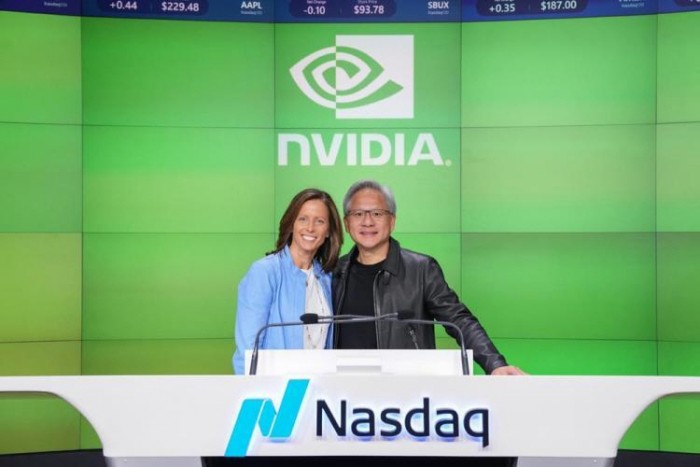 |
| Nvidia CEO Jensen Huang appears on a digital billboard at the Nasdaq MarketSite in New York on November 23 (local time). / Reuters-Yonhap |
With Jensen Huang returning as CEO on November 23 (all times local), 11 days after his resignation, U.S. authorities are stepping up their investigations into AI chip transactions involving China. The United States has added seven companies, including Singapore-based Megaspeed, which is suspected of diverting AI chips to China, to its export control list, while Congress is examining whether Nvidia actively intervened in the government investigation. Although Nvidia's shares rebounded following Huang's return, analysts say business risks associated with its operations involving China have yet to be resolved.
Huang is scheduled to testify on December 1 in a closed-door, transcribed interview before the House Foreign Affairs Committee, the House Intelligence Committee and the House Select Committee on the Strategic Competition Between the United States and the Chinese Communist Party. On December 3, he will appear at a public hearing before the Senate Banking Committee. Congress plans to examine the circumstances surrounding Nvidia's chip transactions. Lawmakers will also press for answers on whether U.S.-made semiconductors were used to strengthen China's military and AI capabilities and what measures the administration took to prevent this.
In particular, scrutiny will focus on whether the flow of AI technology into China can be effectively blocked. For Nvidia, extending export control regulations to Southeast Asian data center operators and semiconductor distributors could disrupt its overseas sales strategy.
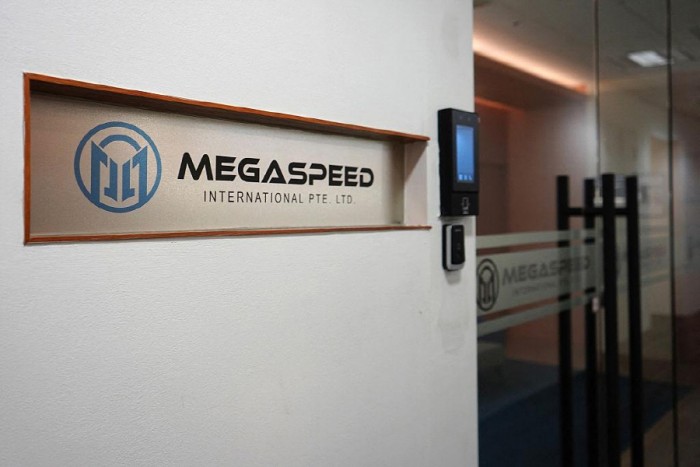 |
| The interior of the Ocean Financial Centre, where Singapore-based Megaspeed has its registered office, on November 10, 2026. / Reuters-Yonhap |
Megaspeed and six other firms added to export control list
Against this backdrop, the U.S. Department of Commerce on November 23 added seven companies to its Entity List, including Megaspeed International and related companies in Malaysia and Thailand, citing the potential diversion of advanced computing chips to uses other than their intended purposes. These companies must obtain separate licenses to receive U.S.-origin products, software and technology. U.S. authorities will review license applications under a presumption of denial. Megaspeed is an official Nvidia cloud partner and operates data centers in Southeast Asia.
An emerging issue is whether Nvidia intervened in the investigation into Megaspeed. Rep. Gregory Meeks, the ranking Democrat on the House Foreign Affairs Committee, and Rep. Sydney Kamlager-Dove recently requested records from U.S. authorities to determine whether Nvidia exerted improper influence over the Commerce Department-led investigation. Reuters reported that Commerce Secretary Howard Lutnick had recently received a letter outlining these concerns.
Congress intends to examine whether the Commerce Department gave Nvidia opportunities to intervene in the investigation and whether the independence of export control enforcement was compromised. Lawmakers have raised concerns over the fact that Nvidia directly requested a meeting with investigators at the Commerce Department's Bureau of Industry and Security (BIS) in August last year. Nvidia previously explained that Jeffrey Kessler, then an under secretary of commerce, had provided guidance on how the company could communicate with government officials. U.S. authorities have not concluded that any unlawful conduct was identified during the investigation.
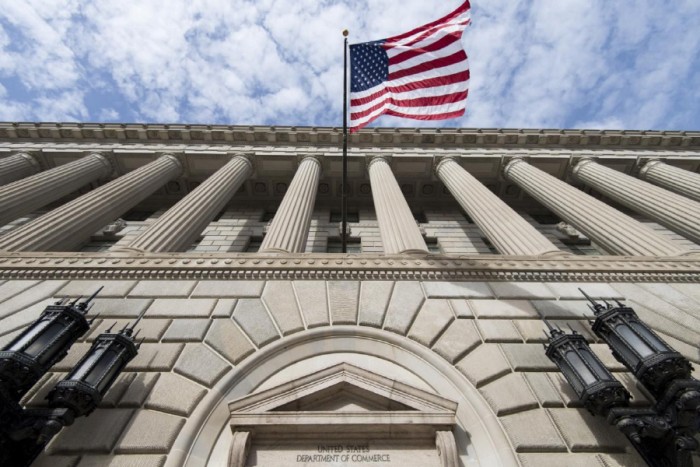 |
| The Herbert C. Hoover Building, which houses the U.S. Department of Commerce in Washington, D.C. The Commerce Department is strengthening export controls to block indirect channels through which Chinese companies can remotely access advanced semiconductors via data centers in third countries. / VOA |
U.S. moves to block indirect access for AI model development via third countries, weighs controls on firms in allied nations
The U.S. government is taking an increasingly tough stance. It is expanding regulations aimed at blocking China's access to AI chips through third countries altogether. The same approach applies to its efforts to tighten restrictions on individual companies. The Commerce Department has also outlined measures to control U.S.-made advanced semiconductors installed in overseas data centers. Under the measures, remote access from third countries, including China, would require U.S. authorization. Exports of advanced semiconductors to Singapore, Malaysia, Thailand, Indonesia and Brazil would also require separate licenses.
The measures are intended to block indirect channels through which Chinese companies can develop AI models. The aim is to completely prevent them from accessing computing resources at data centers in third countries without directly importing chips. The scope of regulations has thus been expanded beyond physical semiconductor exports to encompass cloud computing and data center technology.
Congress is also pursuing related legislation. Lawmakers are discussing expanding congressional authority to receive advance notification of and intervene in AI chip exports, as well as measures to track the locations and end users of exported chips. Potential controls on semiconductor equipment manufacturers in allied countries are also being discussed in negotiations over the National Defense Authorization Act (NDAA) for fiscal year 2027. The companies targeted include ASML of the Netherlands and Tokyo Electron of Japan.
Cheon Hyun-bin
Most Read
-
1
AMD's Lisa Su floated as potential Nvidia successo..

-
2
China President Xi's Keynote Speech at the APEC C..

-
3
Alice Huang, affair partner of Jensen Huang, repor..

-
4
Iran resumes attacks after two months, targeting U..

-
5
Russian warship sinks in suspected drone attack at..

-
6
Inside Kylin Villa, the symbol of China's reform h..

-
7
Trump, Xi, Putin call for security cooperation at..

PEOPLE







-
Address : In-Young Bldg., 34, Uisadang-daero 1-gil, Yeongdeungpo-gu, Seoul
Copyright by ASIATODAY CO., LTD. All rights resereved