



Samsung ships HBM4, leading AI memory race
Feb 13, 2026, 07:58 am


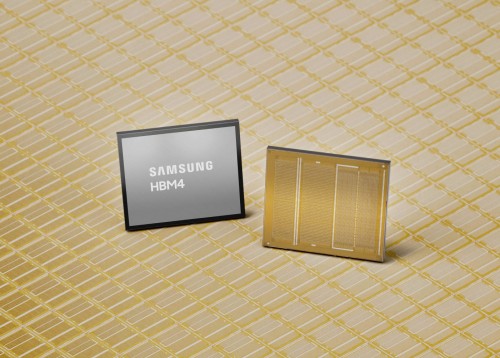 |
| Samsung Electronics’ sixth-generation high-bandwidth memory (HBM), HBM4, a key component for artificial intelligence (AI) systems. / Courtesy of Samsung Electronics |
Samsung Electronics has officially begun the world’s first mass shipment of HBM4, the sixth-generation high-bandwidth memory (HBM) regarded as a core component for artificial intelligence (AI) systems.
The move places Samsung a step ahead of its competitors in the intensifying race for dominance in the AI memory market. Industry observers say the company has effectively planted the first flag in the next-generation HBM competition, not only achieving a “world’s first” milestone but also delivering top-tier performance.
Samsung said on Feb. 12 that it has started full-scale mass shipments of HBM4. The new product adopts the cutting-edge 1c DRAM (10-nanometer-class sixth-generation) process from the outset, enabling stable yields from the early stages of mass production without requiring redesign.
HBM4 surpasses the 8Gbps industry standard set by JEDEC by about 46%, achieving a data rate of 11.7Gbps and up to 13Gbps. Memory bandwidth per stack reaches up to 3.3TB/s, approximately 2.7 times higher than its predecessor.
The company also improved energy efficiency by about 40% through low-power design technologies. Thermal resistance and heat dissipation characteristics were enhanced by 10% and 30%, respectively, further strengthening its suitability for high-performance AI workloads.
Hwang Sang-jun, executive vice president and head of memory development at Samsung Electronics, said, “Breaking from the precedent of applying previously verified processes, we adopted the most advanced technologies, including 1c DRAM and a 4nm foundry process. Through process competitiveness and design improvements, we secured ample headroom for performance expansion and were able to meet customers’ demands for higher performance in a timely manner.”
#Samsung Electronics #HBM4 #high-bandwidth memory #AI semiconductor
Copyright by Asiatoday
Most Read
-
1
Kia Sportage outperforms Mazda CX-5 in German auto..

-
2
Houthis launch successive attacks on Saudi airport..

-
3
Saudi Arabia, Iran hold first diplomatic talks to..

-
4
U.S. deploys carrier, 10,000 more troops to Middle..

-
5
Saudi airport in Riyadh struck again, leaving at l..

-
6
Putin's ally visits China on the 8th ahead of APEC..

-
7
Five ASEAN countries welcome Myanmar coup leader

PEOPLE






HEADLINE NEWS

-
Address : In-Young Bldg., 34, Uisadang-daero 1-gil, Yeongdeungpo-gu, Seoul
Copyright by ASIATODAY CO., LTD. All rights resereved